Mud, Memory, and Making: The Pottery Studios Quietly Reshaping Bury's Creative Soul
Mud, Memory, and Making: The Pottery Studios Quietly Reshaping Bury's Creative Soul
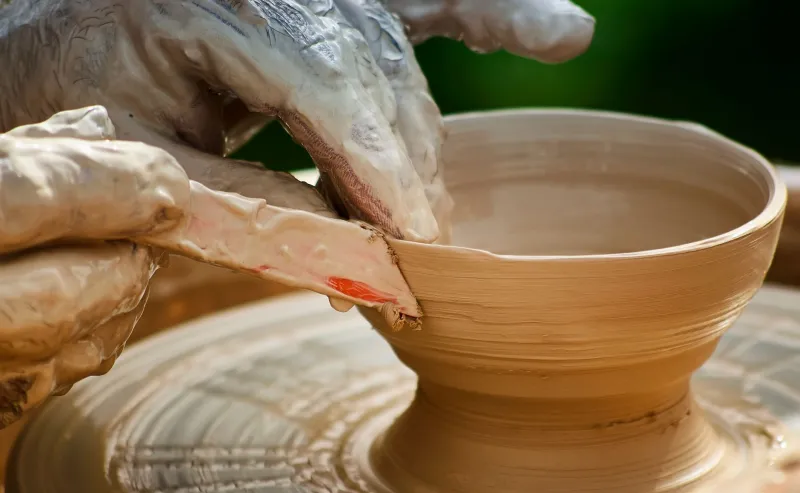
There's a particular kind of silence that settles over a pottery studio. Not the absence of sound exactly — there's the gentle hum of a wheel, the scrape of a tool against wet clay, the occasional soft thud of a piece being set down — but a quality of attention that's hard to find anywhere else. People lean in. They focus. The outside world, with all its noise and urgency, recedes.
It's that quality, more than anything, that seems to be drawing people to Bury's growing constellation of ceramics workshops and community studios. And once you've spent an afternoon watching a roomful of beginners lose themselves completely in the act of making something with their hands, it's not hard to understand why.
Hands in the Earth, Eyes on the Future
Bury has always been a town that makes things. The mills, the market, the manufacturing legacy — it's all woven into the fabric of the place. So perhaps it shouldn't surprise anyone that when people started craving slow, tactile creativity in the wake of pandemic lockdowns, pottery found its moment here.
The numbers back it up. Community studios across the town report waiting lists that didn't exist three years ago. Beginner wheel-throwing sessions book out within hours of going live. Suppliers say local orders for clay and glazing materials have jumped noticeably. Something has shifted.
"I think people spent a lot of time during lockdown staring at screens and feeling completely disconnected from anything physical," says one studio coordinator who runs weekend workshops out of a converted unit near the town centre. "When things opened back up, there was this hunger — and I mean genuine hunger — to actually touch something. To make something imperfect and real and yours."
Her studio, which started as a small side project during the pandemic, now runs five days a week across a range of skill levels. She's had to turn people away. The demographic spread surprises her still: retired teachers alongside university students, shift workers fitting in an early Saturday session before the school run, men in their fifties discovering ceramics for the first time and wondering why they waited so long.
From the Mill Floor to the Studio Wheel
There's a pleasing historical echo in all of this. The connection between Bury's industrial past and its current crafts resurgence isn't just symbolic — it's material. The same impulse that drove generations of workers to find dignity and identity in skilled labour is visible in today's makers, even if the clay is a far cry from the cotton that once defined the town.
One local ceramicist, who grew up in Bury and studied at art college before returning to set up her own practice, is explicit about that lineage. Her work — functional pieces with textured surfaces that deliberately echo industrial forms, bowls and vessels that feel like they belong in both a kitchen and a gallery — is a direct conversation with the town's heritage.
"There's something about working with a material that comes from the ground," she explains, running a thumb along the rim of an unglazed piece. "Clay has memory. It holds the mark of whatever touched it. I find that really moving when I think about what this town has made and what it's lost. The work is a way of honouring that."
Her studio offers open sessions twice a week alongside her own practice, and she's deliberate about keeping them genuinely accessible. Sliding-scale pricing, no experience required, a relaxed atmosphere that prioritises process over product. "I never want someone to feel like they're not good enough to be here," she says simply. "That's not what this is for."
The Beginner's Mind
Ask anyone who's tried pottery for the first time and they'll tell you the same thing: it's harder than it looks, and that's entirely the point. There's no faking your way through centring clay. The material resists, wobbles, collapses. You have to be present, patient, and willing to fail repeatedly before anything remotely useful emerges.
For many of Bury's newer converts, that difficulty is precisely the draw. In a culture saturated with instant results and polished outcomes, the slow, humbling process of learning to throw a pot feels almost radical.
"I work in marketing," admits one regular at a Tuesday evening workshop, sheepishly showing off a slightly lopsided mug she's clearly proud of. "Everything I do at work is about perfection and speed. Coming here and being absolutely rubbish at something, in the nicest possible way, is the most relaxing thing I do all week."
That sentiment crops up again and again. The pottery studio as antidote. As permission to be a beginner. As a place where the journey is so obviously the destination that nobody feels the need to pretend otherwise.
Community Fired in a Shared Kiln
Beyond the individual experience, what's striking about Bury's pottery revival is its communal dimension. Studios here aren't functioning as solo retreats — they're becoming genuine gathering points, places where friendships form over shared benches and conversations flow as freely as the slip.
Several community organisations have begun partnering with local studios to offer therapeutic ceramics sessions for people dealing with anxiety, isolation, and bereavement. The results, by all accounts, have been quietly remarkable. There's something about the shared vulnerability of learning a new physical skill that breaks down the barriers people carry into rooms.
One mental health charity working with a studio in the north of the borough reports that participants often describe the sessions as the highlight of their week — not because they're producing great pots, but because they're in a room with other people, making something together, without pressure or judgment.
What Gets Made, and What It Means
The pieces that come out of Bury's studios range wildly — wobbly beginner bowls fired with enormous pride, to genuinely striking exhibition-quality work that holds its own in any gallery context. Several local makers are now selling through independent shops and online, building small but real businesses around their practice.
There's also a growing conversation about where ceramics fits within Bury's wider cultural offer. A handful of makers are pushing for a dedicated community ceramics space — somewhere with proper kilns, affordable membership, and room to grow. It's early days, but the appetite is there.
What's already clear is that Bury's relationship with making things — with transforming raw material into something useful, something beautiful, something that carries the mark of a human hand — hasn't gone anywhere. It's just found a new medium.
And if you happen to walk past a certain studio on a weekday evening and see the warm light spilling out onto the pavement, the silhouettes of people bent over their wheels in that particular absorbed silence, you'll understand immediately why this revival feels like something more than a trend.
It feels like coming home.