Floor Space and Freedom: The Dance Communities Quietly Transforming Bury
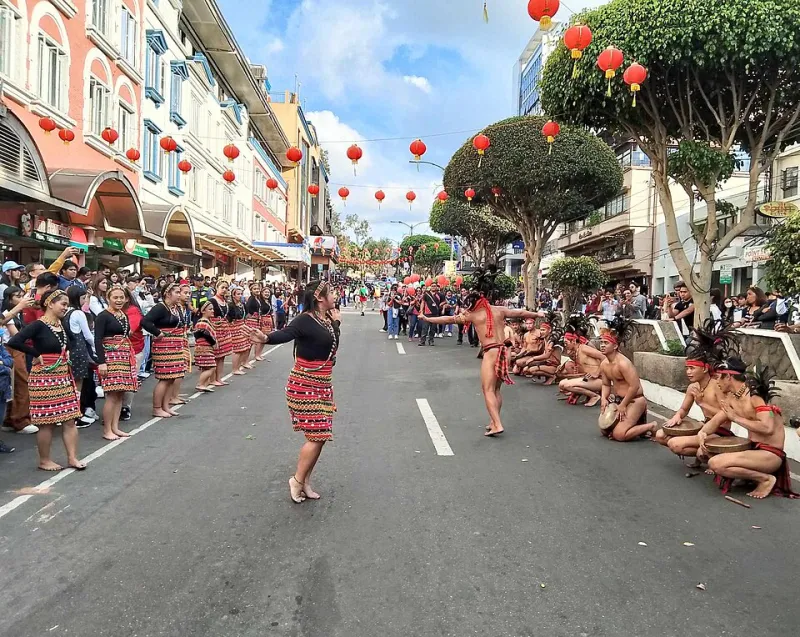
Photo: Bsbt osas, CC BY-SA 4.0, via Wikimedia Commons
There's a Thursday evening in a Bury community centre where something extraordinary happens. A group of women ranging in age from their twenties to their late seventies move together through a bhangra routine, laughing when someone loses the timing, clapping when someone finally nails a tricky transition. The energy in the room is electric. The joy is completely unperformed. And unless you already know to look for it, you'd never know it was happening.
This is Bury's dance scene: sprawling, diverse, deeply rooted in community, and almost entirely absent from the town's official cultural conversation.
Everywhere and Nowhere
Search for Bury's arts highlights and you'll find theatre, music, visual art, and spoken word celebrated in abundance. Dance gets a footnote, if that. It's a peculiar omission given how many people across the borough are actively involved in some form of movement practice — not as spectators, but as participants.
Ballroom and Latin clubs meet weekly across the borough, drawing couples who've danced together for decades alongside complete beginners who signed up after watching a Saturday night television competition. Contemporary dance collectives rehearse in any space they can secure. Street dance crews gather wherever there's a smooth floor and a decent speaker. South Asian dance forms — bharatanatyam, bhangra, bollywood fusion — are taught and practised in community spaces from Bury town centre to Radcliffe and beyond.
The numbers are significant. The cultural footprint is enormous. The coverage is almost nonexistent.
Generations on the Floor
Amara Hussain runs a South Asian dance group that has been operating in Bury for eleven years. What started as a small class for her daughter's school friends has grown into a multi-generational community of over sixty regular participants.
"Dance in our culture is not separate from everything else," she explains. "It's how we celebrate, how we grieve, how we tell stories, how we pass things on. When the grandmothers dance with the granddaughters, something is being transmitted that you can't write down or put in a book."
Amara's group performs at local festivals, weddings, and community events, but she's frustrated that they're rarely considered when Bury's cultural programme is being put together. "We're always available when someone needs 'diversity' for a programme. But we're not often asked to be part of the main story. That distinction matters."
It's a tension that surfaces repeatedly across Bury's dance communities — the difference between being included as decoration and being recognised as a genuine, central part of the town's cultural identity.
The Ballroom Faithful
At the other end of the stylistic spectrum, Bury's ballroom and sequence dancing community is one of the largest and most enduring social dance scenes in the borough. Clubs like those meeting at sports centres in Ramsbottom and Radcliffe have been running continuously for decades, weathering venue changes, funding cuts, and the disruption of the pandemic with remarkable resilience.
Terry and Lynne Ashworth have been dancing together for thirty-two years and have been involved with the same Bury-area ballroom club for most of that time. For them, the social dimension is inseparable from the dancing itself.
"It's a community," Terry says simply. "People have met their partners here. People have come here after bereavement and found a reason to get out of the house again. People have made friends who've lasted a lifetime. The dancing is the mechanism for all of that."
Lynne nods vigorously. "During lockdown, we did Zoom sessions. It was ridiculous — dancing in your living room on a tiny screen — but people turned up every week because they needed each other. That tells you what it really is."
Street Dance and the Claimed Spaces
For the borough's street dance community, the relationship with space is more complicated and more urgent. Without dedicated studios or reliable venue access, crews work with what's available: a school hall booked for two hours on a Sunday, a sports centre that lets them in after the football's finished, occasionally a car park or outdoor space when the weather cooperates.
Jordan Baptiste has been involved in Bury's street dance scene since his teens and now helps coordinate a loose collective of crews across the borough. He's philosophical about the lack of infrastructure but clear-eyed about its costs.
"We've always made it work because we had to," he says. "But making it work takes so much energy that could be going into the dancing. Every week is another round of 'where are we rehearsing, has anyone confirmed the booking, is the heating going to be on.' It's exhausting."
Jordan points to cities like Manchester and Leeds, where dedicated street dance spaces have allowed communities to flourish and develop in ways that weren't possible before. "Bury's got the talent. Genuinely. We've got people who could compete at national level. What we don't have is the infrastructure to support them properly."
Why Dance Gets Left Behind
The relative invisibility of dance in Bury's cultural conversation isn't accidental. It reflects broader patterns in how the arts are funded, covered, and valued in the UK. Dance is expensive to stage, difficult to photograph compellingly, and often lacks the built-in audience infrastructure that theatre and music benefit from.
There's also a class and cultural dimension. Many of the dance forms thriving in Bury are community-based, participatory, and rooted in specific cultural traditions that mainstream cultural institutions have historically been slow to engage with seriously.
"Theatre gets a building," Amara observes. "Music gets venues. Dance gets a corner of the sports hall if you're lucky. That hierarchy is not an accident."
Something Is Shifting
And yet. There are signs that Bury's dance communities are moving — in every sense — towards greater visibility. Conversations are happening between local arts organisations and dance groups about how to better integrate movement-based work into the borough's cultural offer. Young dancers are using social media to build audiences and document their practice in ways that previous generations couldn't.
Jordan is cautiously excited. "The work is there. The community is there. People just need to look properly. When they do, I think they're going to be genuinely surprised by what's been happening right under their noses."
Bury Festival certainly is. Consider this article the beginning of looking properly.