Empty Shops, Full Hearts: How Bury's Pop-Up Art Scene is Reclaiming the High Street
Empty Shops, Full Hearts: How Bury's Pop-Up Art Scene is Reclaiming the High Street
There's a particular kind of sadness that settles over a shuttered shop front. The ghost of a sign, a few forgotten hangers, a floor plan that once buzzed with purpose. Bury, like every British market town, knows this feeling well. But lately, something rather wonderful has started happening in those gaps.
Local artists are moving in — temporarily, creatively, and with an energy that makes you forget the empty unit was ever anything else.
The Anatomy of a Pop-Up Gallery
The mechanics are simpler than you'd think. An artist or a small collective identifies a vacant property, approaches the landlord or managing agent, and proposes a short-term licence — sometimes as brief as two weeks, occasionally stretching to three months. Rent is often peppercorn or entirely waived. In exchange, the space gets footfall, a lick of purpose, and the kind of goodwill that no commercial tenant can manufacture.
Sarah Holt, a mixed-media artist based in Ramsbottom who staged her first pop-up on The Rock last spring, describes the process as "terrifying and completely addictive." She spent three days scrubbing old carpet adhesive from the floor before hanging a single piece. "There's no white-walled gallery infrastructure to hide behind," she says. "The rawness of the space becomes part of the work."
 Photo: The Rock, via cherry.img.pmdstatic.net
That rawness is precisely the point. Strip lighting that doesn't quite work. Walls that carry the memory of a thousand paint jobs. These aren't bugs — they're features. The impermanence gives the work a charge that conventional gallery settings sometimes drain away.
Landlords, Logistics, and the Art of the Ask
Not every property owner is immediately enthusiastic. Some worry about insurance liability. Others are nervous about the reputational optics of admitting a unit has been empty long enough to warrant a creative intervention. A few simply don't respond at all.
But attitudes are shifting. Marcus Webb, who manages a small portfolio of commercial properties in the town centre, started saying yes about eighteen months ago after a persistent approach from a local photography collective. "I was sceptical at first," he admits. "But they left the place cleaner than they found it, brought in maybe three hundred visitors over a fortnight, and two of those visitors ended up asking about the unit for legitimate commercial use. It's not charity — it makes business sense."
That's a crucial reframing. Pop-up culture isn't just a consolation prize for a struggling high street. It's active market research, community engagement, and placemaking rolled into one. Councils across the UK are beginning to recognise this, and Bury is no exception — the local authority has been quietly supportive of initiatives that animate the town centre, even when formal funding structures remain thin.
The Artists Behind the Windows
Walk down certain stretches of Bury on the right weekend and you might stumble into a printmaker demonstrating her press to curious passers-by, or a sculptor whose work fills a former estate agent with something approaching wonder. These aren't people waiting for a big break — they're making their own.
Jameel Okafor, a ceramicist who grew up in Bury and studied at Manchester School of Art, returned to the town specifically because of what he describes as its "creative permission." "In a big city, you need connections, you need money, you need to already know someone," he says. "Here, you can just ring someone up, have a conversation, and three weeks later you're showing work. That directness is rare."
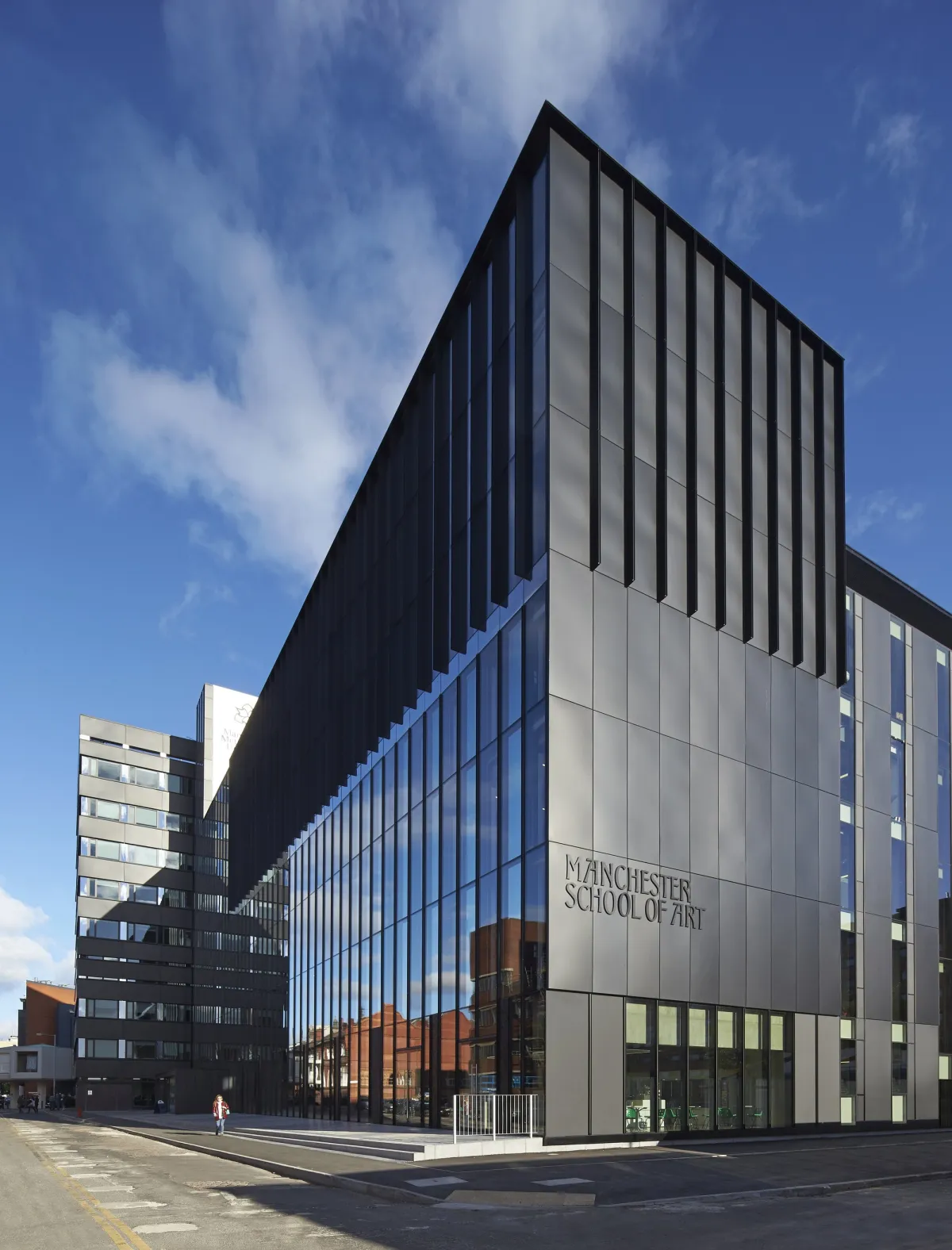 Photo: Manchester School of Art, via images.adsttc.com
For many artists, the pop-up model also sidesteps the gatekeeping that still quietly operates in the formal arts world. There are no selection panels, no curatorial committees, no requirement to have shown previously in approved spaces. The work speaks for itself, to whoever happens to walk past.
Short-Term Culture, Long-Term Change?
The honest answer is: possibly. The evidence from comparable towns — Margate, Hastings, parts of Bradford — suggests that creative clustering in vacant units can act as a genuine catalyst for neighbourhood change. Artists move in, communities engage, independent businesses follow, and the character of a place begins to shift.
But it's not automatic, and it's not without tension. There are legitimate questions about gentrification, about who benefits when creative activity raises the perceived value of an area. In Bury's case, the hope is that because so much of this activity is led by people who actually live here — who have roots, relationships, and a stake in the town's future — the benefits stay local.
Sarah Holt is already planning her second pop-up. She's got a unit in mind, a landlord who's "warming up," and a body of new work that needs to be seen. "I'm not waiting for someone to give me permission," she says. "The space is there. The art is here. That's enough to start."
She's right. And Bury is better for it.