Culture Without the Price Tag: The Brilliant People Making Bury's Arts Scene Free for Everyone
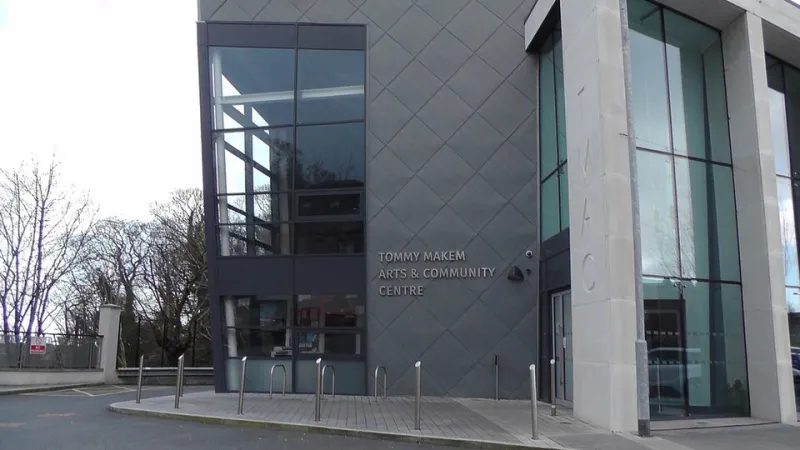
Photo: Sean Davis , CC BY-SA 2.0, via Wikimedia Commons
Culture Without the Price Tag: The Brilliant People Making Bury's Arts Scene Free for Everyone
Let's be honest about something: culture has a class problem.
Not everywhere, not always, and not without honourable exceptions — but the creeping privatisation of arts and entertainment, the ticket prices that climb year on year, the workshops that cost more than a weekly shop, the festivals that require a level of disposable income that a significant chunk of the population simply doesn't have — all of it adds up to a quiet, steady exclusion of the people who arguably need creative experience the most.
In Bury, though, a different story is being written. Across the town, a loose but determined network of organisers, venues, charities, and plain old-fashioned community-minded people are working to ensure that a tight budget is never the reason someone misses out on a gig, a workshop, or a day of arts and culture with their kids.
We went looking for them. Here's what we found.
Pay What You Can — and Mean It
The pay-what-you-can model has existed in arts funding for years, but it's often been applied half-heartedly — a nominal option buried in a booking system, or a token gesture that still assumes a baseline level of spending. In Bury, a handful of organisers are doing it properly.
One music promoter who runs regular acoustic and folk nights across several venues in the town centre moved to a genuine sliding-scale model eighteen months ago. The bottom of that scale is zero. "I was losing audiences," he says bluntly. "Not because people didn't want to come. Because they couldn't afford to. Once I made it properly free-entry-if-needed, the rooms filled back up. People give what they can. Some nights the total on the door is more than I'd have got from a fixed ticket price. Some nights it's less. But the room is full, and the room being full matters."
He's careful to emphasise that the model only works because his costs are low and his venues are supportive. But he's been actively talking to other local promoters about replicating it, and several are now experimenting with similar approaches.
Free Family Days: The Bigger Picture
For families with children, the cost of engaging with arts and culture can be eye-watering. A day out to a festival or arts event — once you've factored in tickets, travel, food, and the inevitable ice cream — can easily run to fifty or sixty pounds. For families on tight incomes, that's simply not possible.
Several of Bury's arts organisations have responded by building genuinely free family programming into their annual calendars. One community arts charity runs quarterly free creative days in public spaces across the borough — parks, libraries, the market square — offering drop-in workshops in everything from printmaking to storytelling to percussion. No booking required, no suggested donation, no catch.
"We've had families turn up who've never engaged with anything arts-related before," says the charity's programme coordinator. "Because there's no financial risk, there's no barrier to trying. You can just wander in. And what we find, consistently, is that people who come to a free event once often become regulars — because they've had a good experience and the fear is gone."
The events are funded through a combination of Arts Council grants, local authority support, and small-scale fundraising. It's a patchwork, she admits, and it requires constant effort to maintain. But the alternative — programming only what can be commercially sustained — is one she refuses to accept.
Subsidised Workshops: Getting Creative Skills to Everyone
Workshops and classes represent one of the stickiest access problems in arts participation. The costs of tuition, materials, and venue hire mean that even community-focused organisations often have to charge rates that exclude lower-income participants.
A ceramics studio in Bury has tackled this head-on by introducing a bursary scheme — funded partly by charging slightly higher rates for their premium weekend sessions, and partly through a small community fundraising campaign — that covers the full cost of a six-week beginners' course for anyone who applies and demonstrates financial need. The application process is deliberately low-barrier: a short form, no means-testing, no proof of income required. "We trust people to be honest," says the studio's founder. "And they are."
Similarly, a theatre company that runs youth performance workshops has introduced a 'no child turned away' policy, absorbing the cost of any young person whose family can't meet the session fee. They've raised money specifically for this through crowdfunding and by approaching local businesses for modest sponsorship. The scheme has enabled several young people from lower-income households to participate in productions they'd otherwise have missed entirely.
The Role of Venues
Venues themselves have a crucial part to play, and some of Bury's independent spaces are stepping up in ways that deserve recognition. Several pubs and social clubs that host live music have committed to keeping at least a portion of their gig calendar free-entry, absorbing the cost as part of their wider community offer. A community centre near the town's eastern edge operates a 'culture credits' scheme — essentially an internal currency earned through volunteering at events, which can be exchanged for tickets to paid-entry shows.
"It means that if you can't afford a ticket but you can give two hours of your time, you're not excluded," explains the centre's manager. "And the volunteering builds community in its own right. People who come in to help at one event often end up involved in the next one. It creates a whole ecosystem."
Why This Matters — and Why It's Hard
None of this is easy. The organisations doing this work are, almost without exception, operating on tight margins and relying heavily on the goodwill of people who are already stretched. Funding for community arts has faced sustained pressure for over a decade. Every bursary scheme, every free family day, every pay-what-you-can gig represents someone — usually several people — working extra hours, writing extra grant applications, and making the argument again and again that accessible culture is not a luxury.
But the alternative argument — that culture should be self-sustaining, market-driven, available to those who can pay — has consequences that are visible and damaging. Communities that can't access creative experience become communities that feel unseen. Young people who never encounter arts provision become adults who don't know what they're missing. The cultural ecology narrows, and what's lost is harder to quantify than what's gained, but it's real.
In Bury, the people fighting against that narrowing are doing something quietly radical. They're insisting, through their actions rather than their words, that a town's cultural life belongs to everyone who lives in it.
How to Find and Support These Initiatives
If you're in Bury and money is tight, the following are worth knowing about:
- Check event listings for sliding-scale or free-entry options — more promoters are offering these than ever before, though they're not always prominently advertised.
- Ask directly. Many workshops and classes have bursary places that aren't widely publicised. A straightforward email asking whether any funded places are available will often get a positive response.
- Libraries remain one of the most reliably free cultural resources in any town — and Bury's are worth exploring for events as well as books.
- Volunteer. Many organisations will offer free access to events in exchange for a few hours of help. It's a genuine exchange, and a great way to get involved.
And if you're in a position to support these efforts — whether by paying a little more when you can, donating to community arts funds, or simply spreading the word — the people making this work happen will be quietly, sincerely grateful.
Culture belongs to everyone. In Bury, people are fighting to keep it that way.