Strings Attached: The Quiet Heroes Making Music Possible for Every Child in Bury
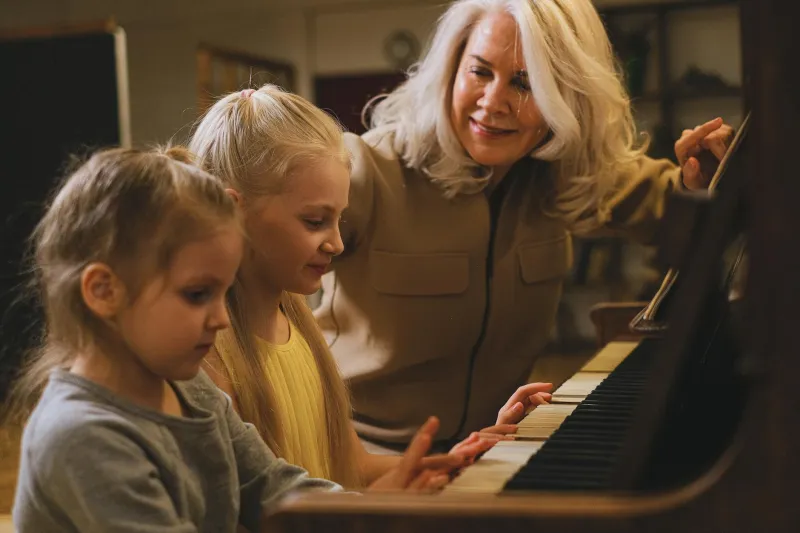
The Sound of Possibility
In a small practice room above the community centre on Walmersley Road, eight-year-old Amara is holding a violin for the first time. Her fingers fumble with the bow, the sound that emerges is more squeak than symphony, but her smile could power the building. Six months ago, her mum Lisa thought music lessons were a luxury they simply couldn't afford. Today, Amara is part of a quiet revolution that's ensuring every child in Bury has the chance to discover their musical voice.
 Photo: Walmersley Road, via mrmrsenglish.com
This isn't a story about privilege or private tutors. It's about ordinary people doing extraordinary things to break down the barriers that have traditionally kept music education locked away from working-class families. It's about borrowed instruments, volunteer teachers, and the radical belief that talent flourishes everywhere – if only we give it the chance.
Breaking Down the Walls
The statistics are stark: music tuition can cost upwards of £30 per lesson, while a decent student instrument might set a family back several hundred pounds. For many households already juggling bills and budgets, music education feels like an impossible dream. But across Bury, a network of initiatives is proving that it doesn't have to be this way.
The Bury Music Trust, established just three years ago, now loans out over 200 instruments to young people across the borough. From violins to saxophones, keyboards to drum kits, their collection represents thousands of pounds worth of equipment that's available completely free to families who need it.
"We don't means-test or ask intrusive questions," explains coordinator Helen Marsh. "If a parent says they can't afford to buy an instrument, that's enough for us. Our job is to remove obstacles, not create new ones."
The Volunteer Army
Behind every borrowed violin and subsidised lesson is a volunteer giving their time freely. Take Graham Fletcher, a retired music teacher who now runs Saturday morning sessions at three different community centres. "I taught in schools for thirty-five years," he says, tuning a guitar between lessons. "I saw too many talented kids whose families couldn't afford private lessons after school music programs were cut. This is my way of fighting back."
Graham's not alone. The Bury Musicians Collective has recruited over forty professional and semi-professional players who donate a few hours each week to teaching. They're not charity workers or volunteers in the traditional sense – they're working musicians who remember their own struggles and want to pay it forward.
Jazz pianist Maria Gonzalez, who performs regularly at venues across Manchester, drives to Bury every Tuesday evening to teach at the Radcliffe Community Hub. "Music changed my life completely," she says. "I grew up in a similar situation – my family couldn't afford lessons, couldn't buy instruments. A teacher at school saw something in me and went the extra mile. Now it's my turn."
Stories That Matter
For the Ahmed family, the impact has been transformational. Twelve-year-old Hassan borrowed a trumpet through the scheme eighteen months ago and has since joined the local youth brass band. His younger sister Fatima started with a keyboard and now plays piano at a grade 5 level.
"The children have found something that's entirely their own," says their mother, Ayesha. "Hassan practices every day after school – sometimes I have to tell him to stop! Fatima plays for her grandparents on video calls. Music has given them confidence, discipline, something to be proud of."
The ripple effects extend beyond individual families. Schools report that children involved in the schemes show improved concentration and academic performance. Youth workers note better engagement and social skills among participants. Most importantly, young people are discovering talents they never knew they had.
Beyond the Instrument
What makes Bury's approach special is how it goes beyond simply lending equipment. The schemes offer group sessions where children can play together, regular performances that give them goals to work towards, and connections with local bands and orchestras that show them where their musical journey might lead.
Fifteen-year-old Josh Martinez started learning guitar through the program three years ago. He's now in a band with two other participants and they've played at several local events. "It's not just about learning to play," he says. "It's about being part of something bigger, meeting people, having something to work towards."
The social aspect proves crucial for many participants. In an age of social media isolation, music-making provides genuine human connection. Children who might struggle in traditional academic settings find their confidence through collaborative music-making.
The Teachers Who Care
Perhaps the most powerful element of these schemes is how they connect young people with mentors who genuinely care about their development. Unlike rushed school music lessons or expensive private tuition focused on grade exams, these sessions allow for real relationships to develop.
Violin teacher Sandra Patterson, who works with the program two evenings a week, puts it simply: "These children aren't just learning pieces or techniques. They're learning that someone believes in them, that their musical voice matters, that they deserve the same opportunities as anyone else."
The Challenge Ahead
Despite their success, these schemes operate on shoestring budgets and rely heavily on donations and volunteer goodwill. The waiting list for instruments grows longer each term, and demand for lessons consistently outstrips supply. Local businesses and residents have been generous, but sustainable funding remains a challenge.
"We're proving that when you remove financial barriers, talent emerges everywhere," says Helen Marsh. "But we need more instruments, more teachers, more spaces to practice. The demand is there – we just need the resources to meet it."
How You Can Help
The beauty of Bury's music schemes is how accessible they make participation – both for learners and supporters. Unwanted instruments gathering dust in attics across the borough could be giving young people their first taste of musical magic. Professional musicians with a few spare hours could be nurturing the next generation of talent.
Local venues are invited to host performances, giving young musicians the chance to experience playing for real audiences. Community groups can sponsor instrument purchases or lesson subsidies. Even small contributions make a difference when they're part of a collective effort.
The Sound of Tomorrow
As Amara finishes her violin lesson, carefully placing the borrowed instrument back in its case, something remarkable is happening. Not just in that small practice room, but across Bury, in community centres and church halls, in school music rooms opened after hours and front rooms transformed into teaching spaces.
A generation of young people is discovering that music isn't a luxury reserved for the privileged few – it's a birthright that belongs to everyone. In a world that often feels divided by opportunity and circumstance, these schemes prove that talent, passion, and community spirit can overcome any barrier.
The next time you hear music drifting from a community centre or see a young person carrying an instrument case down your street, remember: you're witnessing a quiet revolution. One borrowed instrument, one volunteer lesson, one supportive community at a time, Bury is ensuring that every child's musical dreams have the chance to become reality.