Forged in Fire, Shaped by Vision: The Sculptors Transforming Bury's Public Spaces
When Metal Meets Memory
In the shadow of Bury's former textile mills, something extraordinary is taking shape. Where once industrial machinery thundered day and night, a new generation of sculptors is breathing fresh life into the bones of our town's industrial heritage. They're not just making art – they're rewriting Bury's story in steel, stone, and clay.
James Hartwell's workshop sits in what was once a Victorian cotton warehouse, its high ceilings and brick walls now home to half-finished sculptures that seem to emerge from the very fabric of the building. "I'm not creating from nothing," he explains, running weathered hands over a piece crafted from reclaimed loom parts. "I'm having a conversation with Bury's past, trying to understand what it wants to become."
 Photo: James Hartwell, via guide-tourisme.com
The Alchemy of Transformation
Bury's sculptural renaissance isn't happening by accident. A perfect storm of factors has created fertile ground for three-dimensional art: affordable studio spaces in converted industrial buildings, a rich seam of reclaimed materials from the town's manufacturing heritage, and a growing appetite among residents and visitors for authentic cultural experiences.
The numbers are compelling. Over the past five years, Bury has commissioned more public sculptures than in the previous three decades combined. From the controversial 'Threads of Time' installation at Bury Market to the beloved 'Mill Workers' Memorial' outside the Transport Museum, these works are quietly transforming how people experience and understand our town.
 Photo: Bury Market, via www.timeforkids.com
"We're at a tipping point," believes curator Helen McKenzie, who's been tracking the local scene for the past decade. "Bury is developing a reputation among serious collectors. People are starting to plan weekend trips specifically to see what our artists are creating."
Masters of Material
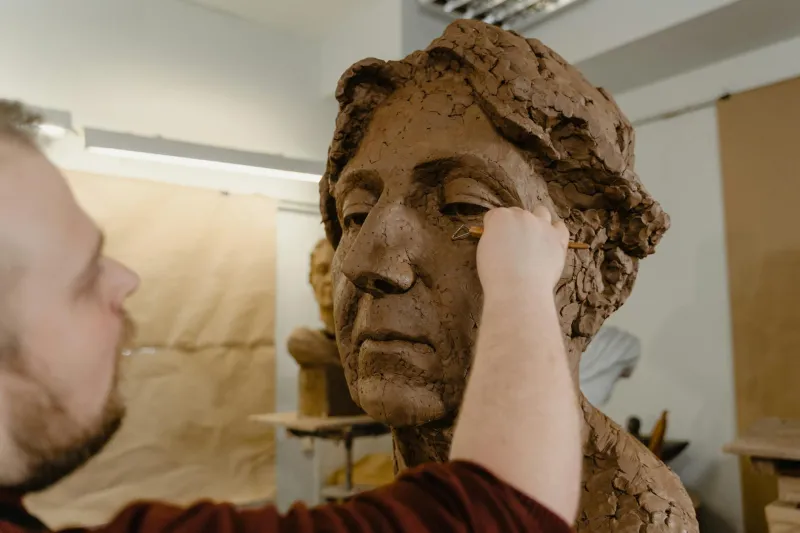
The diversity of approaches among Bury's sculptors is striking. At one end of the spectrum, ceramicist Maria Santos works with the most ancient of materials, her hand-thrown vessels and installations drawing inspiration from the town's geological history. Her recent commission for Bury Art Museum – a series of ceramic fragments embedded in the museum's exterior wall – tells the story of local clay deposits that once supplied potteries across Lancashire.
"Clay remembers everything," Santos explains, her studio filled with test pieces exploring different firing techniques. "The minerals in Bury's soil carry the memory of glaciers, of ancient seas. When I work with local clay, I'm collaborating with millions of years of history."
At the other extreme, metalworker Rebecca Thompson creates towering installations from salvaged industrial equipment. Her workshop, a former boiler house, echoes with the sound of angle grinders and welding torches as she transforms discarded machinery into powerful statements about regeneration and renewal.
From Overlooked to Unmissable
Perhaps nowhere is the transformative power of sculpture more evident than in Bury's public spaces. The 'Gateway' installation at Bury Interchange, created by local artist collective Iron & Stone, has turned what was once a dreary underpass into an Instagram-worthy destination. The piece – a series of weathering steel arches that frame views of the surrounding hills – demonstrates how thoughtful public art can completely reimagine a space.
"Good public sculpture doesn't just occupy space, it creates space," notes urban planner David Walsh, who's been involved in several of Bury's recent commissions. "These works are giving people new reasons to pause, to notice, to engage with their environment."
The economic impact is becoming measurable. The 'Sculpture Trail' launched by Bury Council now attracts over 15,000 visitors annually, with many combining art appreciation with visits to local cafes, shops, and markets. What started as cultural investment is proving its worth in pounds and pence.
Challenges in Three Dimensions
Yet success brings its own complications. Rising property values in areas with significant public art installations risk pricing out the very artists who made them culturally significant. Studio rents are climbing, and competition for public commissions is intensifying as Bury's reputation spreads.
"We need to be careful not to kill the goose that's laying the golden eggs," warns James Hartwell. "The authenticity of what's happening here comes from artists being able to live and work affordably in the community. If that changes, we risk becoming just another arts destination with no soul."
Material costs present another challenge. The same reclaimed steel that gives Bury sculptures their distinctive character is becoming harder to source as other artists and developers recognise its value. Some sculptors are adapting by working with local scrap dealers and demolition companies, turning waste streams into art supplies.
Building Tomorrow's Heritage
What's most striking about Bury's sculptural scene is its deep connection to place. Unlike the generic public art that blights many town centres, these works grow organically from local materials, stories, and landscapes. They're not just decorating Bury – they're helping to define what Bury becomes.
"We're creating tomorrow's heritage," reflects Maria Santos. "In fifty years, these sculptures will be as much a part of Bury's identity as the market or the black pudding. We're not just making objects – we're making meaning."
The signs suggest this is just the beginning. Plans are underway for Bury's first dedicated sculpture park, whilst several major developers are incorporating artist commissions into new residential and commercial projects. The town that once shaped the Industrial Revolution is quietly positioning itself as a destination for those who shape culture.
In workshops across Bury, the sound of creation continues: clay spinning on wheels, metal singing under the welder's torch, stone yielding to chisel and imagination. These are the sounds of a town rediscovering its creative soul, one sculpture at a time.