Listen Before It's Gone: The People Preserving the Sounds That Make Bury Home

Listen Before It's Gone: The People Preserving the Sounds That Make Bury Home
Close your eyes for a moment. Think about Bury. What do you hear?
Maybe it's the market traders in full voice on a Saturday morning, that particular mix of banter and bargain that hasn't changed in living memory. Perhaps it's the bells from the Parish Church drifting over the rooftops on a still Sunday. The rumble of the Metrolink pulling into the interchange. The crowd noise from Gigg Lane — that swelling, collective exhale when a chance goes begging.
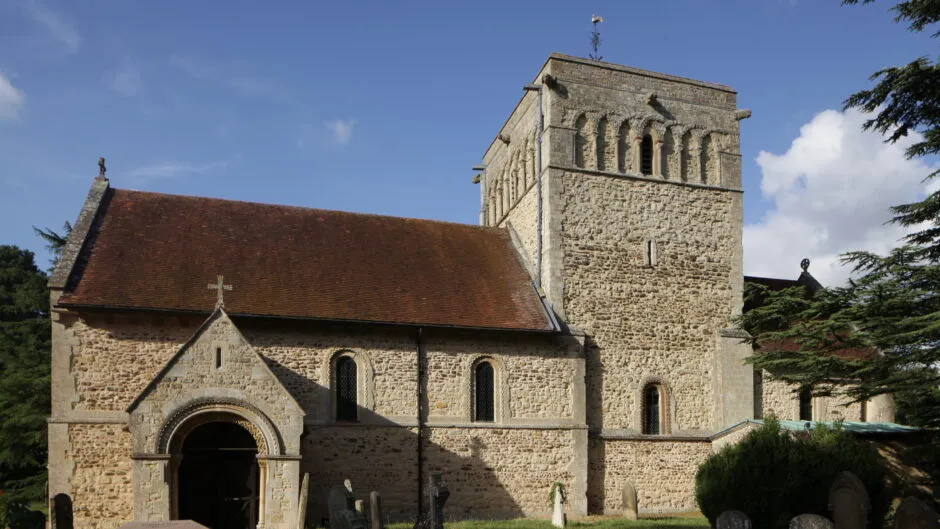 Photo: Parish Church, via courtauld.ac.uk
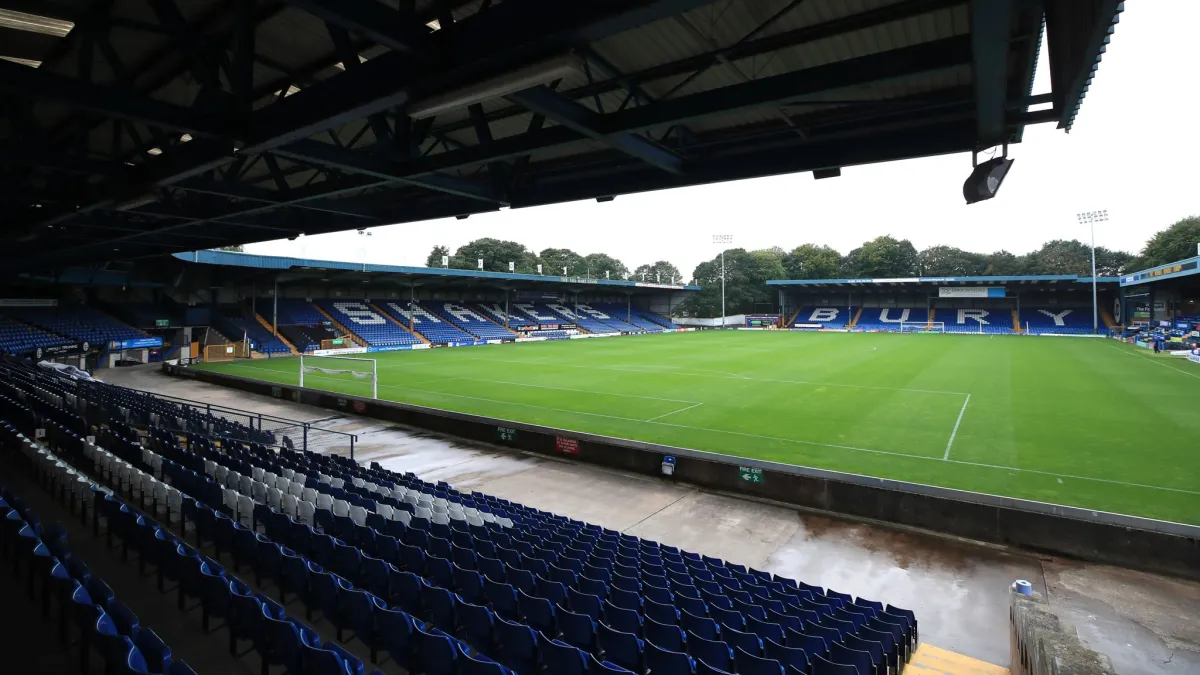 Photo: Gigg Lane, via e0.365dm.com
These sounds are Bury. And almost nobody is recording them.
The Archive That Wasn't There
Dave Cartwright stumbled into acoustic heritage by accident. A retired sound engineer from Radcliffe with a background in live music production, he'd spent decades recording things people specifically wanted preserved — concerts, ceremonies, spoken word events. Then, about four years ago, he started noticing what wasn't being captured.
"I went to a market in Derbyshire that I'd visited as a kid," he says. "The stalls were the same, roughly. But the sounds were completely different. The old-fashioned patter was gone. The specific rhythm of it. And I thought — we're losing this everywhere, and nobody's paying attention."
He came home to Bury and started recording. Not formally at first — just a decent microphone, a portable recorder, and the patience to stand somewhere unremarkable and listen. What he captured over the following months became the seed of what is now called the Bury Sound Archive, a growing collection of field recordings, oral history fragments, and ambient audio that documents the acoustic texture of a town most people think they know well.
Why Sound Gets Left Behind
Visual heritage has powerful advocates. Architectural conservation bodies, photographic archives, local history societies — there's an infrastructure for saving what can be seen. Sound is different. It's ephemeral by nature, which perhaps explains why it rarely triggers the same protective instinct.
But acoustic heritage is just as vulnerable, and in some ways more so. A building can be listed and preserved. A soundscape cannot. When the last market trader who learned his patter from his grandfather retires, that particular cadence of commerce goes with him. When a factory closes, the specific mechanical rhythms that defined a community's working day vanish without trace.
Dave's collaborator on the project, a music teacher named Priya Nair who grew up near the former Elton reservoir, makes the connection to memory explicit. "Smell gets all the credit for triggering nostalgia," she says, laughing. "But sound does the same thing. I can hear a certain kind of crowd noise and I'm nine years old again at Gigg Lane with my dad. That's not trivial. That's identity."
What's Being Captured
The Bury Sound Archive now holds several hundred recordings, ranging from a few seconds to nearly an hour. Some are immediately recognisable — the bells, the market, the trams. Others are stranger and more intimate: the acoustic signature of the Millgate's indoor spaces, the particular echo of the underpass near the interchange, the sound of rain on the canvas awnings of the outdoor stalls.
There are also recordings that document sounds already fading. Dave has a clip of an elderly man — a former weaver, now in his eighties — demonstrating the rhythm of a hand loom he's kept in his garage for forty years. "That sound doesn't exist in Bury anymore, not in any working context," Dave says. "But it was the soundtrack to thousands of people's daily lives for generations. It deserves to exist somewhere."
Oral history sits alongside the ambient recordings. Priya has been interviewing long-term residents about sounds they remember — not just what things looked like, but what they sounded like. The particular cry of a specific market trader. The way the crowd moved acoustically through the old Bury Football Club ground. The sound of the town on Christmas Eve.
The Bigger Argument
Dave and Priya are not, it should be said, professional archivists. They have no institutional backing, no significant funding, and no formal training in acoustic preservation. What they have is curiosity, commitment, and a pair of very good microphones.
This is both the project's greatest strength and its most pressing vulnerability. Without support — financial, institutional, or simply in terms of people willing to contribute recordings and memories — the archive risks remaining a personal passion project rather than a genuine public resource.
They're hoping to find a home for the collection, whether that's with Bury's local studies library, a university archive, or a community-led digital platform. In the meantime, they're recording as much as they can, as fast as they can.
"Towns change," Dave says, packing his recorder away after an afternoon at the market. "That's fine. That's what towns do. But change shouldn't mean forgetting. These sounds are evidence that people lived here, worked here, celebrated and grieved here. They're worth keeping."
He presses record. A trader calls out. Somewhere, a bell begins to ring.
Listen. While you still can.