Life After the Last Bow: Bury's Performers on What Comes Next
Life After the Last Bow: Bury's Performers on What Comes Next
Nobody warns you about the silence.
That's the thing that comes up, again and again, when you talk to performers about stepping back from the stage. Not the loss of applause, not the absence of camaraderie, not even the strange grief of a career winding down — though all of those are real. It's the silence. The particular silence of a Tuesday morning when there's no rehearsal, no call time, no reason to get your voice warmed up before noon.
"The first few months, I genuinely didn't know what to do with myself," says Margaret, a former dancer who performed with several of Bury's most celebrated community theatre companies over three decades before a knee injury brought her performing career to an abrupt end in her mid-fifties. "I'd structured my whole life around performance. Evenings, weekends, school holidays — all of it organised around whatever show was coming next. When that stopped, I felt like I'd lost a language."
Margaret is laughing as she says it, sitting in the kitchen of her home in Radcliffe, a mug of tea going cold beside her. She's found her footing now — more on that shortly — but she's clear-eyed about the difficulty of the transition. "People see the glamour of it, even at the community level. What they don't see is how completely it defines you. And then one day it doesn't, and you have to figure out who you are without it."
The Identity Question
Identity sits at the heart of almost every conversation you have with retired performers. When you've spent years — sometimes an entire adult life — being someone who performs, stepping away from that can feel like a kind of bereavement. Not for a person, but for a version of yourself.
Dave, a comedian who spent two decades working Bury's pub and club circuit before semi-retiring in his early sixties, puts it with characteristic bluntness: "I was 'the funny one.' That was my whole thing. At parties, at work, everywhere. When I stopped doing gigs, I had this crisis — if I'm not doing the comedy, am I still the funny one? Or am I just some bloke?"
He pauses. "Turns out I'm still the funny one. But it took a while to work that out without the stage to prove it on."
For musicians, the question takes a different shape. Brian, a trumpet player who was a cornerstone of several brass ensembles across Bury for over thirty years, describes a gradual withdrawal that felt, at times, like losing a physical sense. "Music isn't just something I did. It's how I experienced the world. Stepping back from regular playing — even just rehearsals — changed how I heard things. Sounds felt flatter. Less meaningful. That was frightening, actually."
The Unexpected Second Acts
What's striking, talking to this generation of Bury performers, is how many of them have found not an ending but a reinvention — often in directions they never anticipated.
Margaret, the dancer, now teaches movement classes at a community centre in Bury town centre. She works with older adults, many of whom have never danced in their lives, and with young people who've been referred through social services. She's also become an informal mentor to several younger performers navigating the early stages of their own careers.
"I thought teaching would be a consolation prize," she admits. "I was wrong. It's different from performing, but it's not lesser. When I see someone move in a way they couldn't move six months ago — when I see them inhabit their body differently — that's its own kind of joy. A different kind, but real."
Dave has channelled his comedic instincts into something nobody predicted: he now runs creative writing workshops at Bury Library, focused specifically on memoir and personal narrative. "Turns out stand-up is basically just storytelling with better timing," he grins. "Everything I learned writing sets — how to structure a story, where to put the reveal, how to make someone feel something — all of that transfers. The workshops are the best thing I've ever done. Better than any gig."
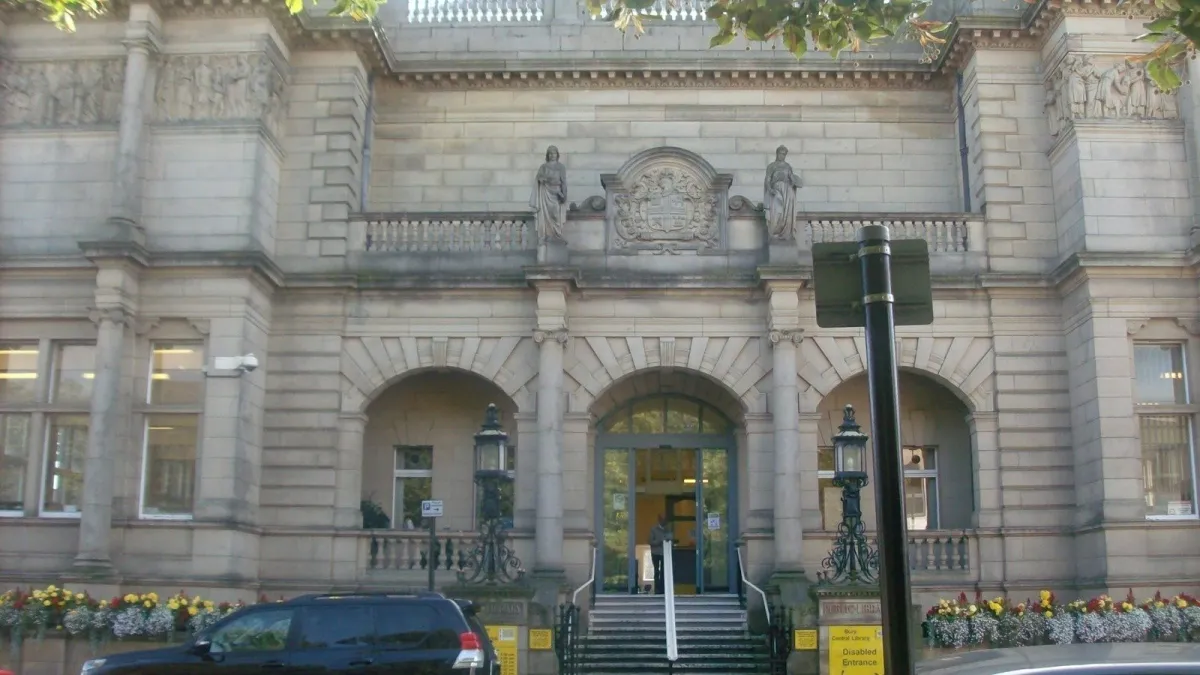 Photo: Bury Library, via assets.change.org
Brian, meanwhile, has become a passionate advocate for music education in Bury's schools, volunteering with several programmes and helping to fundraise for instrument access schemes. He still plays, but the relationship has changed. "It's less about performance now and more about transmission. Passing something on. I think that's what you're supposed to do with things you love."
What the Stage Gives, and Takes
There's a complexity to these stories that's worth sitting with. For all the warmth and resilience on display, none of these people pretend the transition was easy or that they have no regrets. The physical toll of performance careers — particularly for dancers and musicians — is rarely acknowledged openly, but it's present in every conversation.
Margaret's knee, which ended her dancing, is a source of ongoing pain that she manages quietly. Brian's hearing, after decades of playing in brass bands and occasionally too-loud venues, has deteriorated more than he'd like. Dave talks, with unusual candour, about the emotional exhaustion of years spent performing through personal difficulties, using humour as both shield and weapon.
"The stage asks a lot," he says. "It gives back enormously, but it asks a lot. I'm not sure I always understood that exchange while I was in the middle of it."
What all three share is a refusal to sentimentalise. They loved what they did. They miss aspects of it. They've found new ways to be themselves that feel genuine rather than compensatory. And they're all, in different ways, still deeply embedded in Bury's cultural life — not as performers, but as something arguably more sustaining: as keepers of the flame.
The Town That Shaped Them
It would be easy to tell these stories as universal human experiences — and they are, in part. But they're also specifically Bury stories. The town's cultural ecosystem, built on community theatre, local music scenes, grassroots comedy nights, and arts organisations that punch well above their weight, has shaped these performers in ways that are visible even now.
"Bury gave me my confidence," Margaret says simply. "The stages here, the audiences here, the other performers here — they made me who I am. So giving back to Bury makes complete sense. This town invested in me. I want to invest back."
That's perhaps the most hopeful thing about what happens when Bury's performers take their final bow. The lights don't go out. They just shift — illuminating something different, something quieter, something that might just be more important than any single performance could ever be.
The show, it turns out, goes on. Just differently.