Dust Off, Doors Open: Inside Bury's Venue Resurrection Story
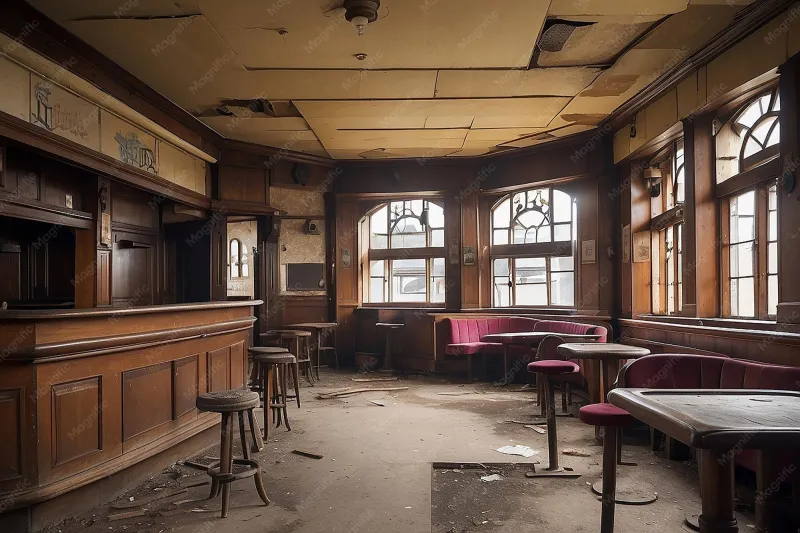
Photo: abandoned pub interior renovation community arts space UK, via img.freepik.com
There's a particular kind of grief that comes with watching a venue close. It's not like losing a shop. It's losing a room where things happened — first gigs, bad dates, brilliant nights you still talk about. Bury has felt that grief more than once in recent years. But something's shifting. Slowly, stubbornly, some of those rooms are coming back — and the stories behind their revival are more complicated, more creative, and more instructive than you might expect.
We spent several weeks talking to the people doing the hard work of resurrection. What we found wasn't a single template. It was a patchwork of graft, compromise, community goodwill, and occasionally sheer bloody-mindedness.
The Old Pub That Became a Gallery (Sort Of)
The building on the edge of Bury town centre had been a pub for the better part of a century. When it shut its doors three years ago, the assumption was that flats would follow. Instead, a group of local artists — most of them already sharing a WhatsApp group to moan about the lack of affordable studio space — made an approach to the landlord.
"We weren't even sure what we were asking for at first," admits one of the founding collective members, who asked to remain unnamed while lease negotiations are still ongoing. "We knew we wanted the space. We didn't quite know what that meant legally."
What followed was eighteen months of navigating licensing conditions inherited from the building's pub days, negotiating a peppercorn rent arrangement, and convincing the local council that a mixed-use creative space wouldn't become a noise nuisance. The licensing piece was the hardest bit. Permitted Development Rights don't automatically cover arts use, and the group had to apply for a change of use — a process that cost them several hundred pounds and a lot of patience.
But they got there. Today, the ground floor hosts a rotating gallery programme and a small ceramics workshop. The upstairs — still smelling faintly of old carpet and lager — is three artist studios, fully let.
"The building remembers what it was," says one resident artist. "We try to honour that. There's something about working in a space with that much history."
Licensing: The Bit Nobody Warns You About
Every single person we spoke to for this piece raised licensing as their biggest unexpected challenge. The Licensing Act 2003 governs what can happen in a venue — live music, performance, even some kinds of exhibition — and its requirements can catch community groups off guard.
The good news is that since the Live Music Act 2012, venues with a capacity under 500 no longer need a licence for unamplified live music between 8am and 11pm. That's a genuine lifeline for smaller spaces. But the moment you introduce amplification, ticketed events, or late licensing, you're back in formal application territory.
Bury Council's licensing team, to their credit, have been broadly supportive of community-led projects. Several of the groups we spoke to mentioned being pointed towards the Licensing Act's 'minor variation' route — a cheaper, faster way to tweak existing licences — as a useful shortcut when taking over a space that already held permissions.
The lesson from the ground: get the licensing conversation started early, and don't assume that what the previous occupants were allowed to do automatically transfers to you.
A Club Night Becomes a Rehearsal Hub
A few streets away, a former nightclub — closed since 2019, its neon sign still faintly visible through the grime — has had a more recent and arguably more dramatic transformation. A local musician who'd been running rehearsal sessions from his garage approached the building's owner after spotting a planning notice and making a speculative call.
"I genuinely expected to get told no," he says, laughing. "Instead, the owner was just relieved someone wanted to do something with it."
The space is now home to six soundproofed rehearsal rooms, built out using a combination of a small Arts Council England grant, a loan from a community development finance institution, and a frankly heroic amount of volunteer labour. The build took four months. The rooms were fully booked within a fortnight of opening.
What's notable here is the financing model. The Arts Council grant covered acoustic treatment and equipment. The CDFI loan — a type of ethical lending specifically designed for community and social enterprises — covered structural work. Neither would have been sufficient alone. Used together, they made a project viable that no conventional lender would have touched.
"People think you need a business angel or a big investor," the musician says. "Actually, you need to know which pots of money exist and how to stack them."
The Theatre That Came Back as a Theatre
Not every resurrection involves reinvention. In one of the more heartening stories we encountered, a former community theatre space that had been used as a storage facility for nearly a decade is in the process of returning to its original purpose — thanks largely to a volunteer-led campaign that began on Facebook and ended up with a formal community asset transfer.
Community Asset Transfers allow local authorities to transfer ownership or management of publicly owned buildings to community groups, often at below-market rates, in exchange for a commitment to community benefit. They're not quick — the process in this case took two and a half years — but they offer genuine long-term security that a short-term lease simply can't.
The group is now working with a local architect on accessibility improvements and hopes to begin programming next spring. Their first season will prioritise local companies who've been without a home since the space closed.
What Actually Works
Across all four of these stories, a few things stand out as consistent factors in success. Community buy-in matters more than capital — every group we spoke to cited local support as the thing that kept them going through the hard months. Relationships with landowners matter too: speculative approaches, made respectfully and with a clear proposal, work more often than people expect.
And patience. Unglamorous, grinding patience. None of these projects happened quickly. All of them hit walls that felt, at the time, insurmountable.
Bury's creative infrastructure didn't disappear overnight, and it's not coming back overnight either. But it is coming back — one dusty, complicated, beautiful room at a time.