Built From the Bottom Up: How Bury Grew a Creative Movement on Its Own Terms
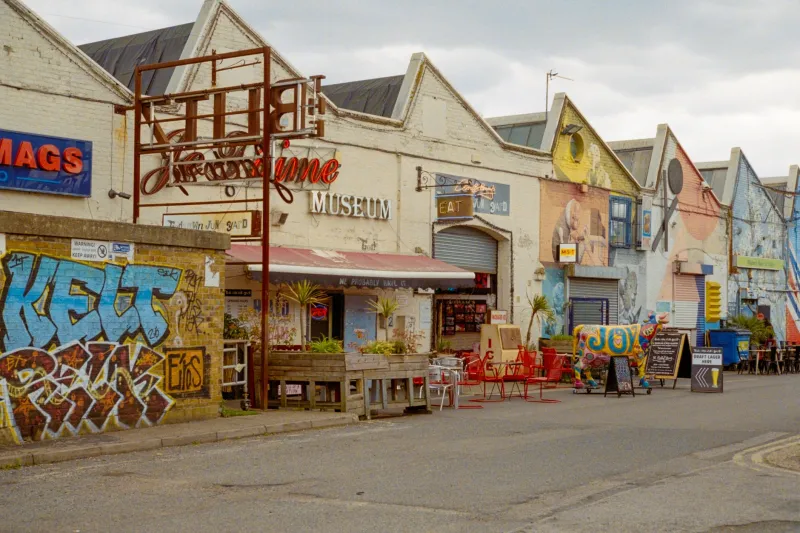
There's a version of this story that starts with a grant. A nice, clean narrative where some regional arts body swoops in, writes a cheque, and a post-industrial town reinvents itself as a cultural destination. Bury's story isn't that version.
What happened here is messier, slower, and — honestly — far more interesting. Over the past two decades, a loosely connected web of artists, community organisers, venue owners, and stubborn optimists quietly built something that no single institution could have designed. A genuine creative ecosystem, rooted in the specific character of this town, funded largely by ingenuity and mutual trust.
So how, exactly, do you build a cultural movement without corporate money? We went looking for answers.
Starting With What You've Got
The first thing you notice when you talk to Bury's creative old-timers is how pragmatic they are. Nobody romanticises scarcity. But there's a clear thread running through every origin story: the refusal to wait for ideal conditions.
When studio space was scarce, artists moved into empty shops on short-term licences. When rehearsal rooms were unaffordable, community centres opened their doors for a nominal fee — or nothing at all. When there was no budget for marketing, flyering became an art form in itself.
"You stop thinking about what you don't have and start getting creative about what's already there," says one long-standing member of a Bury-based arts collective that's been operating for over fifteen years. "The market, the parks, the school halls — all of it becomes potential."
This asset-mapping mindset — cataloguing the town's existing resources rather than lamenting its gaps — became something of an unofficial philosophy. It's not unique to Bury, but it's been applied here with unusual consistency.
The Power of the Informal Network
Ask anyone embedded in Bury's arts scene who the most important person in the local creative economy is, and you'll get a different answer every time. That's not evasion — it's the point.
Unlike many towns where one dominant venue or one well-connected producer shapes the cultural landscape, Bury developed something more distributed. Power, such as it is, lives in relationships rather than institutions. A musician knows a venue booker who knows a visual artist who knows someone with a van and a contact at the council. Favours circulate. Skills get shared.
This informal economy has real limitations — it can exclude newcomers, it relies on personal chemistry, and it doesn't scale easily. But it also proved remarkably resilient when the pandemic hit and formal funding structures collapsed almost overnight.
"The organisations with big overheads fell apart," reflects one theatre maker who's worked across Greater Manchester for thirty years. "The people who'd built their practice around community relationships just... adapted. They already knew how to work without a safety net."
Spaces as Strategy
One of the most deliberate moves in Bury's creative evolution has been the battle for physical space. Cultural infrastructure — studios, rehearsal rooms, performance venues, workshop spaces — is the unglamorous backbone of any arts scene, and it's precisely the thing that gets squeezed out when property values rise.
In Bury, a combination of factors kept spaces accessible longer than in neighbouring towns. Lower commercial rents made experimental use more viable. A handful of sympathetic landlords — some motivated by civic pride, others simply pragmatic about empty units — offered favourable terms to creative tenants. And crucially, artists organised.
Rather than competing for the same spaces, several collectives began pooling resources to share studios, negotiate collectively, and in some cases, make the case to the council for longer-term community asset transfers. It's slow, unglamorous work. But it's produced something durable.
Making Culture Everyone's Business
Perhaps the most significant shift in Bury's creative story isn't about money or space at all — it's about who considers themselves a stakeholder in the town's cultural life.
The market traders who started hosting live music. The barbers who hung local art on their walls. The café owners who turned their back rooms into informal exhibition spaces. None of this was coordinated by a cultural strategy document. It emerged because artists made themselves visible, made themselves useful, and made culture feel like something that belonged to the whole town rather than a specialist minority.
Festivals played a crucial role in this — not as one-off spectacles, but as recurring anchors that reminded people what the town was capable of. Every year, Bury Festival brings together threads from across the creative community: the established and the emerging, the professional and the amateur, the traditional and the experimental. That annual gathering does something important. It reminds everyone that they're part of something bigger than their individual practice.
A Blueprint — With Caveats
Other towns have started paying attention. Delegations from struggling high streets across the North and Midlands have come to Bury asking how it was done, looking for a transferable model.
The honest answer is that there isn't a clean blueprint. Context matters enormously. Bury's particular mix of working-class creative heritage, its geography within Greater Manchester, its specific demographic make-up — all of these shaped what was possible here.
But there are principles worth extracting. Start with relationships, not strategies. Protect space before you need it, not after. Make culture visible in everyday places, not just dedicated arts venues. And perhaps most importantly: trust the people who are already there.
Bury didn't build its creative movement by importing talent or chasing trends. It built it by backing its own — stubbornly, incrementally, and without waiting for anyone else's permission.
That, more than anything, might be the most transferable lesson of all.