All Night Long: The People Who Make Art When Bury Goes to Sleep
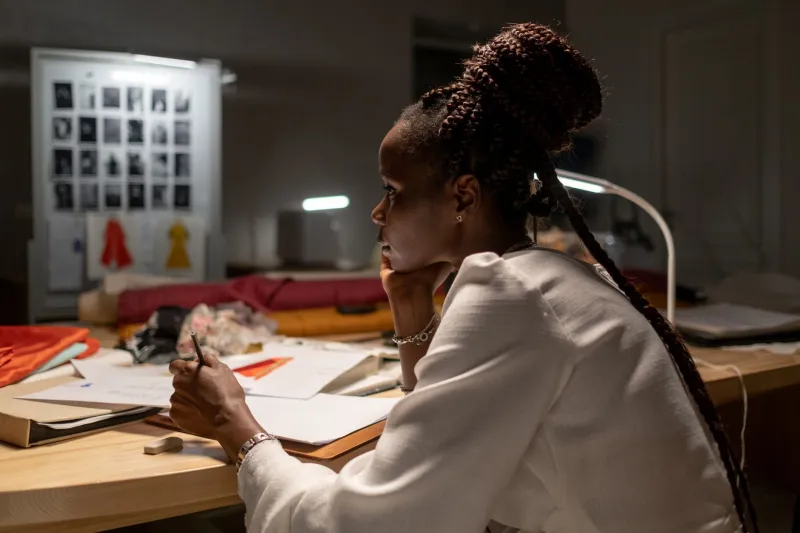
It's 2:47am and someone is crying. Not in distress — in relief. She's been working on a piece of music for three months and something has just clicked, here in a rehearsal room off the Rochdale Road, in the company of seven people she barely knew twelve hours ago. "I didn't know that's what the song needed," she says, wiping her face with her sleeve and laughing. "I genuinely didn't know until just now."
This is what a 24-hour creative marathon looks like from the inside. Not glamorous. Not particularly Instagram-friendly. But absolutely, undeniably alive.
How It Started
The format isn't new — hackathons and game jams have long used the pressure of a ticking clock to generate creative output — but Bury's version has its own distinct character. It grew organically out of the town's studio culture, from the kind of informal late-night sessions that happen when a group of people are already in a space, already making something, and nobody quite wants to be the first to leave.
"The first proper one we organised was a disaster in almost every practical sense," admits Joel, who runs a small recording studio and has been behind several of Bury's more structured overnight events. "The heating packed in at midnight, we ran out of coffee by 1am, and one of the bands had a massive falling out around 3. But the music that came out of it was extraordinary. Something about the chaos just stripped everything back."
That stripping-back is central to what participants describe. The social performance of daytime creative life — the networking, the careful presentation of work-in-progress, the management of reputation — falls away somewhere around the second hour. What's left is the work itself, and the people doing it.
The Participants
Who turns up to spend a night making art? The answer, it turns out, is a wider range of people than you might expect. Yes, there are the twenty-somethings fuelled by energy drinks and ambition. But there are also mid-career artists using the format to break through creative blocks, retired makers who find the communal energy reinvigorating, and people who simply don't have quiet time at home and treat the marathon as a rare extended window of focus.
Amara, a visual artist and mother of two, has attended three overnight sessions in the past year. "My kids are small. The house is never quiet. The idea of having eight, ten, twelve hours to just be in a room making things — that's extraordinary to me. I'd sleep when I was dead."
Her work during these sessions has a different quality to her usual output, she says. More risk-taking. Less precious. "When you're tired and it's 4am and there's no point performing for anyone, you just do the thing you actually want to do. Sometimes that's the best work I make."
The Shape of the Night
Not all marathons follow the same format. Some are tightly themed — a night dedicated to producing work that responds to a specific piece of music, or a constraint like using only found materials. Others are more open, functioning essentially as extended co-working sessions where the shared presence is the point rather than any collective output.
Theatre rehearsals take on a different texture at 3am. "Everyone's defences are down," says Reuben, who directs with one of Bury's community theatre groups. "You stop indicating and start actually doing. I've had breakthroughs in overnight rehearsals that I couldn't have engineered in a month of normal sessions. The tiredness becomes a tool."
Music production sessions tend to generate the most material — a night of working can produce a staggering volume of sketches, samples, and rough recordings that become raw material for weeks of subsequent work. "You're not precious about any individual idea because there are so many of them," says Joel. "You're just generating, generating, generating. The editing happens later."
What the Dark Hours Reveal
There's a philosophy underlying all of this that participants articulate in different ways but keep returning to the same core idea: that ordinary creative life is cluttered with things that aren't actually about making. The emails, the applications, the social media, the career management — all of it falls away when you commit to being somewhere for the whole night with no other agenda.
"It sounds counterintuitive," says Amara, "but I think the exhaustion is part of it. You can't maintain your usual defences when you're tired. The pretension goes. The self-consciousness goes. You're just a person trying to make something real."
There's also something about the shared vulnerability of the experience that builds community in ways that daytime events rarely manage. By 5am, the people in a room together have seen each other struggle, fail, recover, and occasionally produce something that makes everyone stop and pay attention. That shared witness creates bonds.
Dawn and After
The end of a marathon — when the light starts to come through and people begin to pack up — has its own particular atmosphere. Quiet, mostly. A bit dazed. Sometimes euphoric. Always, participants say, worth it.
"You go home and sleep for twelve hours and then you look at what you made and sometimes it's rubbish," Joel admits cheerfully. "But sometimes it's the best thing you've ever done. And either way, you feel like you've been somewhere. Like something actually happened."
In Bury, something is always happening after dark. You just need to know where to look.