After the Last Call: Why Bury's Midnight Culture Scene Deserves Its Moment in the Spotlight
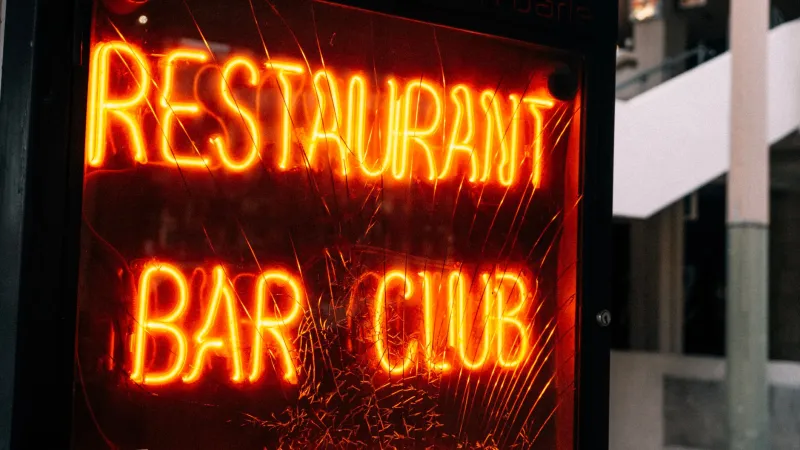
After the Last Call: Why Bury's Midnight Culture Scene Deserves Its Moment in the Spotlight
There's a version of Bury that most people never see. Not the market traders setting up at dawn, not the afternoon gallery crowds, not even the early-evening theatre rush. This is Bury at midnight — neon-lit, loose-limbed, and gloriously alive in ways that no daytime programme can quite replicate.
Ask anyone who's stumbled into a late-night jam session tucked behind a pub on The Rock, or found themselves standing in a car park at 1am eating jerk chicken while a DJ spins forgotten Northern Soul records from a battered laptop, and they'll tell you the same thing: this is where the town shows you who it really is.
The Hours Nobody Talks About
Bury has rightfully earned its reputation as a daytime cultural hub. The festival calendar, the markets, the galleries — they're all brilliant. But there's a creeping assumption, embedded in licensing decisions and noise complaints and planning meetings, that culture has a bedtime. That assumption is wrong, and the people keeping Bury alive past midnight know it.
Take the informal jazz sessions that have been running on and off for years in a handful of venues that would rather not be named in print — not because they're doing anything dodgy, but because the moment something gets official, it changes. "There's a looseness to it," says one regular, a saxophonist who plays session work by day and shows up at these gatherings purely for the love of it. "Nobody's performing. Everyone's just playing. That's a completely different thing."
These sessions don't advertise. They propagate through WhatsApp groups and word of mouth and a knowing nod across a bar. They start around eleven and finish when they finish. And they are, in their own unassuming way, some of the most musically significant things happening in this town.
Poetry That Bites Back
The spoken word scene operates on similar logic. Bury's underground poetry circuit — if you can call something so deliberately unstructured a "circuit" — tends to find its best moments in the small hours. There are regular late-night open mic slots at a couple of venues in the town centre where the atmosphere shifts noticeably once the casual punters have gone home and the committed ones remain.
"Daytime poetry is often quite polished," says one organiser who runs a monthly late-night spoken word event. "Which is fine. But after midnight, people stop performing and start saying things. There's something about exhaustion and darkness and a room full of people who chose to still be there that strips everything back."
The work that emerges from these sessions — raw, politically sharp, occasionally furious — reflects a Bury that doesn't always make it into the heritage brochures. It's the town's anxieties and joys and frustrations spoken aloud by people who live them.
Street Food, Sound Systems, and Survival
Beyond the music and the words, there's the broader ecosystem of Bury's late-night economy — the street food traders who set up outside venues on weekend nights, the pop-up bar operators who've turned empty car parks into temporary social spaces, the small-scale promoters running club nights that double as fundraisers for community projects.
This isn't just culture for culture's sake. It's economics. Every pound spent on a late-night jerk chicken wrap or a ticket to a midnight DJ set is money that stays in Bury, often going directly to local creatives who are also the musicians, the artists, the makers you'll see at the daytime festival.
But this ecosystem is fragile. Licensing restrictions, noise complaints from new-build developments creeping closer to established venues, and the general squeeze on small hospitality businesses have all taken their toll in recent years. Several venues that once hosted late-night creative events have quietly scaled back or stopped altogether.
The Case for Protecting the Night
This is where the conversation gets political, and rightly so. Bury prides itself — loudly and justifiably — on being a town with genuine cultural depth. That pride tends to be expressed through daytime programming: festivals, markets, gallery openings, community events. All vital. All worth celebrating.
But a town's cultural character isn't just what it puts on show in the afternoon. It's what happens when the official programme ends and the people who actually live here take over. The late-night scene isn't a footnote to Bury's cultural story. In many ways, it's the unedited version.
Other UK cities have woken up to this. Manchester's Night-Time Economy Adviser, the grassroots campaigns in Bristol and Leeds — these are recognition that the creative hours after midnight deserve the same advocacy and protection as any daytime arts programme. Bury could and should be part of that conversation.
What Needs to Change
The people running Bury's after-hours scene aren't asking for much. Fairer licensing processes that don't automatically treat late-night creative events as problems to be managed. Planning policies that protect existing venues from being squeezed out by residential development. And honestly, just a bit more acknowledgement that what happens at midnight matters.
"We're not trying to cause trouble," says one venue owner who's been running late-night events for the better part of a decade. "We're trying to keep something alive that makes this town worth living in. That should count for something."
It does. And the next time you're out past midnight in Bury and you hear music drifting from a doorway, or spot a cluster of people huddled around a street food stall with a speaker balanced on a milk crate — don't walk past. Go in. Stay a while. This is Bury at its most honest, and it deserves an audience.