Walls That Speak: How Bury's Mural Revolution is Painting a New Future
The Canvas Revolution
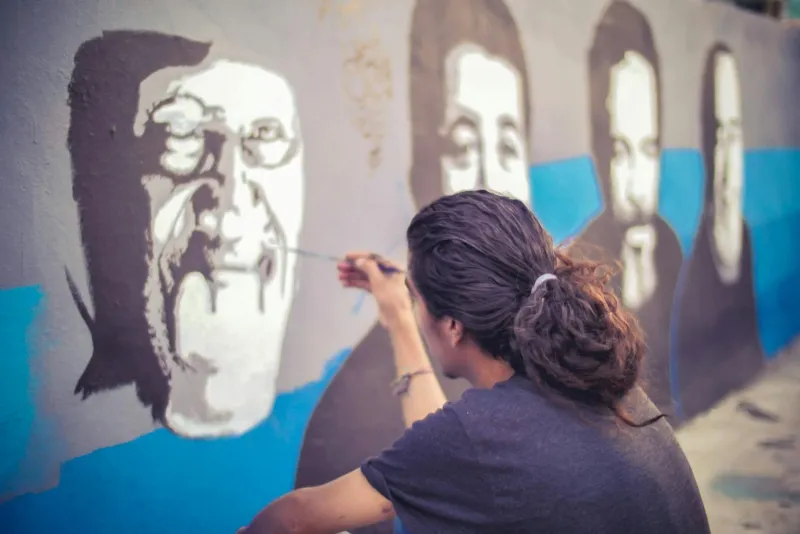
Walk down any street in Bury these days and you'll notice something extraordinary happening. What were once tired brick walls and neglected gable ends are exploding into life with colour, character, and stories that speak directly to the heart of our community. This isn't guerrilla street art or random tagging – this is a carefully orchestrated movement that's transforming how we see and experience our town.
The mural revolution sweeping through Bury represents something far more significant than mere decoration. It's about reclaiming public space, celebrating local identity, and proving that art doesn't need a gallery to change lives.
Beyond the Gallery Gates
Sarah Chen, a local muralist whose work now adorns the side of the old textile warehouse on Mill Street, puts it perfectly: "Art shouldn't be locked away behind glass and admission fees. Every person walking to work, every child heading to school, every pensioner popping to the shops – they all deserve to encounter something beautiful and meaningful in their daily routine."
 Photo: Mill Street, via ahvint.com
 Photo: Sarah Chen, via www.geburtstagswelt.de
Her latest piece, a swirling celebration of Bury's industrial heritage interwoven with symbols of its creative future, took six months to complete. But it wasn't just the painting that took time – it was the conversations. With residents, business owners, councillors, and fellow artists. Each mural that appears on our streets is the result of collaboration, not imposition.
The Permission Revolution
What makes Bury's approach special is how it's bridging the gap between official channels and grassroots creativity. Councillor James Morrison, who chairs the town's Arts and Culture committee, explains: "We realised we had a choice – either watch our walls decay or invite artists to breathe new life into them. The response from residents has been overwhelmingly positive."
The council's streamlined permission process, launched eighteen months ago, has already green-lit over thirty major mural projects. Property owners can apply for matched funding, artists get proper payment for their work, and communities have their say in the planning process. It's bureaucracy with a creative heart.
Voices from the Neighbourhood
Maria Santos, whose terraced house now overlooks a stunning piece depicting Bury's multicultural community, was initially sceptical. "I thought it might be garish or inappropriate," she admits. "But when I saw the designs and met the artist, I realised this was about celebrating our area, not changing it beyond recognition."
The transformation of her street has been remarkable. "Children stop to look at it on their way to school. People take photos. Neighbours who never spoke before start conversations about what they like about the artwork. It's brought us together in a way I never expected."
The Artists Behind the Movement
David Kumar, whose collective 'Bury Walls' has completed eight major commissions this year, sees the movement as part of a broader cultural shift. "People are hungry for authentic, accessible culture. They want art that reflects their lives, their struggles, their hopes. A mural can do that in ways that a traditional exhibition sometimes can't."
His team works exclusively with local themes and community input. Recent projects have celebrated everything from the town's market heritage to its role in the Industrial Revolution, from celebrating local NHS heroes to highlighting environmental concerns. Each piece tells a story that residents recognise as their own.
More Than Pretty Pictures
The impact goes beyond aesthetics. Local businesses report increased footfall in areas where murals have appeared. Estate agents note that properties near significant artworks are generating more interest. Most importantly, community pride is visibly growing.
Tom Richards, who runs a café that commissioned a mural celebrating local food culture, has seen the difference firsthand: "People come specifically to see the artwork, then discover our business. But it's not just about commerce – it's about creating talking points, giving people reasons to explore areas they might have overlooked before."
Challenges and Controversies
Not everyone's convinced. Some residents worry about maintenance costs, others question whether public money should fund what they see as 'decoration'. There have been debates about artistic merit, cultural sensitivity, and the risk of gentrification.
Artist and community organiser Priya Patel acknowledges these concerns: "Any public art programme has to navigate different opinions and preferences. What's crucial is that the conversation happens openly, that communities feel heard, and that the art reflects genuine local voices rather than outside assumptions about what those communities should want."
The Future Canvas
Looking ahead, Bury's mural movement shows no signs of slowing. Plans are already in motion for a 'Mural Mile' walking trail, connecting the town's most significant pieces with QR codes linking to artist interviews and historical context. Schools are being invited to propose themes for future works, and there's talk of an annual mural festival bringing together artists from across the North West.
The transformation of Bury's walls represents something profound about how communities can shape their own cultural landscape. In a world where so much feels imposed from above, these murals represent democracy in action – art by the people, for the people, in the spaces where people actually live their lives.
As you walk through town today, take a moment to really look at the walls around you. Some tell stories of where we've been, others imagine where we're going. All of them prove that the most powerful gallery in Bury doesn't have opening hours – it's always there, always free, always ready to surprise you with something beautiful.