When the Lights Went Down: The Flickering Soul of Bury's Silver Screen Dreams
The Golden Ghosts of Market Street
Walk down Market Street today and you might miss it—the faint outline of Art Deco curves where the Regent Cinema once stood, its neon marquee promising escape to audiences who'd queue round the block for the latest Hitchcock thriller. But look closer, and you'll spot the telltale signs: the wider pavement where crowds once gathered, the peculiar spacing between shop fronts that once housed a foyer grand enough to make Manchester's picture houses jealous.
Bury's cinema story isn't just about bricks and mortar—it's about a town that refused to let the movies die, even when the economics said they should.
"People think cinema culture in smaller towns just faded away with the multiplexes," says Margaret Thornton, who's been running guerrilla film nights since 2018. "But we never stopped watching together. We just got more creative about where we did it."
From Picture Palaces to Pop-Up Dreams
The numbers tell a familiar story. Bury once boasted seven cinemas, from the opulent Regent to the cosy Picturedrome tucked behind the market. By the 1980s, they'd all shuttered their doors, victims of television, changing habits, and the inexorable pull of out-of-town multiplexes.
But something interesting happened in the silence that followed. Rather than mourning what was lost, a new generation of film lovers began reimagining what cinema could be.
Take the Bury Film Collective, started in a back room at the Met in 2015. What began as monthly screenings of forgotten British films has evolved into something more ambitious: outdoor screenings in Clarence Park, themed double-bills in the town's pubs, even a memorable night where they projected "Kes" onto the side of the old mill wall.
"We're not trying to recreate the past," explains collective founder James Hargreaves, adjusting the vintage projector that's become his trademark. "We're proving that the future of cinema isn't just about bigger screens and louder sound—it's about bringing people together to share stories."
The Projectionists' Last Stand
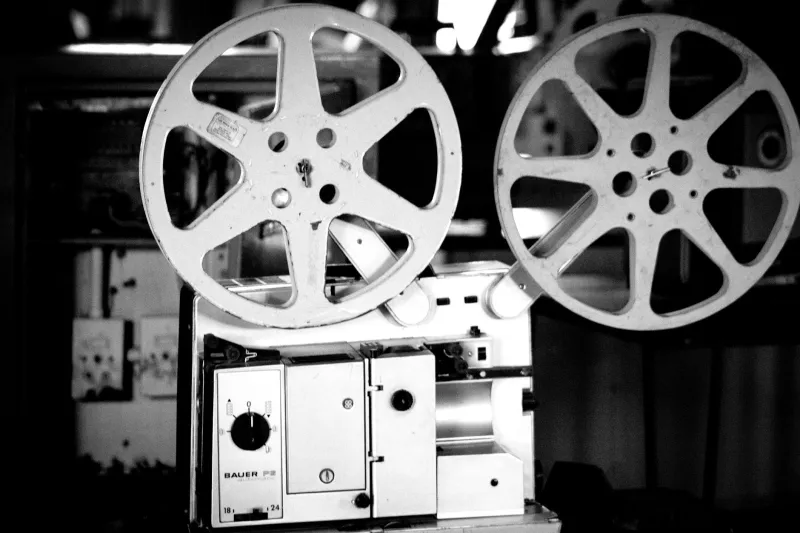
In a storage unit off Rochdale Road, Derek Mullins maintains what might be the last working collection of 35mm projectors in Greater Manchester. At 74, he's one of the few people left who can thread film by feel in complete darkness—a skill that seemed obsolete until local venues started calling.
"Digital's fine for what it is," Derek says, his hands moving instinctively over the mechanical precision of a 1960s Kalee projector. "But there's something about the flicker of real film, the ritual of changing reels. It makes every screening feel like an event."
Derek's become the secret weapon of Bury's cinema revival. When the Arts Centre wanted to screen Lawrence of Arabia in its original format, they called Derek. When a local school decided to show silent films with live piano accompaniment, Derek was there with a projector older than most of the audience.
"I'm not sentimental about it," he insists, though the walls of his unit tell a different story—lobby cards from the Regent's final season, programmes from long-closed fleapits, even the original neon letters that once spelled 'CINEMA' above the Picturedrome's entrance.
Community Screenings, Radical Acts
On a wet Thursday evening in February, thirty-odd people huddle in the upstairs room of the Clarence pub, watching "This Is England" on a screen barely bigger than a large television. It's not glamorous—someone's phone buzzes during the quiet scenes, the heating's playing up, and you can hear the quiz night downstairs.
But there's something electric in the air, something that no amount of Dolby Atmos can replicate.
"This is what cinema was always meant to be," whispers Sarah Chen, who organises these monthly screenings through her community group, Bury Screens. "It's not about the technology—it's about the shared experience, the conversation afterwards, the way a film hits differently when you're watching it with your neighbours."
Sarah's group has become a model for grassroots cinema across the North West. They've shown everything from Bollywood classics to experimental documentaries, always followed by discussions that spill out onto the street and continue in the nearby cafés.
The Next Reel
The irony isn't lost on anyone involved in Bury's cinema revival: in trying to save something old, they've created something entirely new. These aren't nostalgic recreations of picture palace glamour—they're radical experiments in what cinema can be when it's freed from commercial constraints.
"We're not competing with the multiplex," Margaret Thornton explains as she sets up chairs for another outdoor screening. "We're offering something they can't—intimacy, conversation, the chance to discover films you'd never find on Netflix."
As the sun sets behind the East Lancashire Railway and families begin arriving with picnic blankets and folding chairs, it's clear that Bury's cinema culture hasn't just survived—it's evolved into something more vital and connected to the community than those grand old picture houses ever were.
The films may flicker on makeshift screens now, but the magic burns brighter than ever.