Voices Rising: The Quiet Revolution of Bury's Singing Communities
When Strangers Become Harmonies
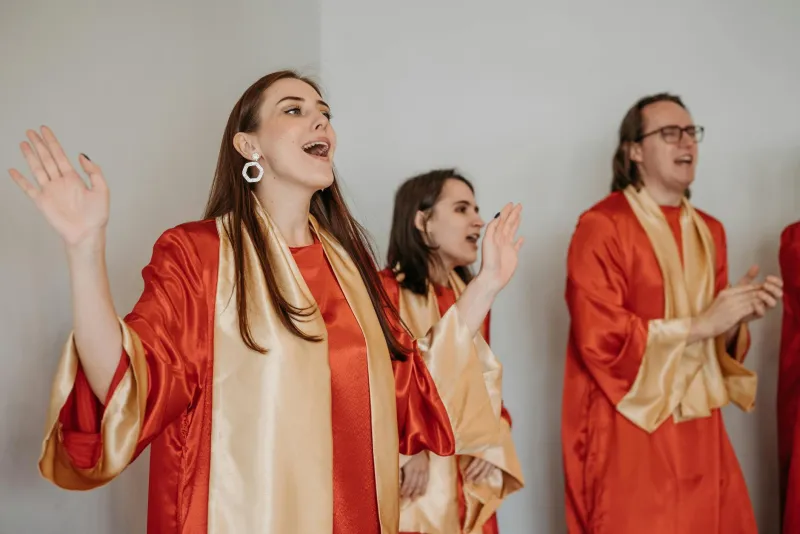
On a Tuesday evening in the back room of The Wellington pub, something magical is happening. Thirty voices – some wavering with age, others bold with youth – blend together in a rendition of 'Sweet Caroline' that would make Neil Diamond proud. This isn't karaoke night; it's the weekly gathering of Bury Voices United, one of a growing number of community choirs that are quietly revolutionising how our town connects.
"We started with six people and a dream," laughs Sarah Mitchell, who founded the group in early 2022. "Now we've got a waiting list." What began as an informal sing-along has evolved into something far more significant – a weekly prescription for loneliness that's proving more effective than any government initiative.
The Sound of Connection
The movement isn't confined to pub corners. Across Bury, community choirs are sprouting in the most unexpected places. The Intergenerational Harmony Project pairs Year 6 pupils from Bury CE Primary with residents from Fairfield Care Home, creating musical bridges across decades. Meanwhile, the Bury Market Singers rehearse between the fruit stalls on Saturday mornings, their voices echoing through the Victorian iron and glass structure.
Dr Emma Richardson, a musicologist at the University of Manchester, has been studying this phenomenon. "Community singing activates the same neural pathways as social bonding," she explains. "When people sing together, their heartbeats actually synchronise. It's biological proof that music brings us together."
Breaking Down Barriers
What makes these groups special isn't just the singing – it's who's doing the singing. Traditional choirs often attracted a narrow demographic, but Bury's new wave is determinedly inclusive. The Ramsbottom Road Collective welcomes refugees and asylum seekers, offering English conversation alongside musical instruction. The LGBTQ+ choir Rainbow Voices meets in the community centre, creating a safe space for expression that extends far beyond the weekly rehearsal.
"I came because I was lonely," admits James Thompson, a 34-year-old teacher who joined after his divorce. "I stayed because I found my tribe." His story echoes through every group – people arriving as strangers, leaving as family.
The Healing Power of Harmony
The timing isn't coincidental. Post-pandemic Bury, like communities everywhere, is grappling with fractured social connections. Mental health referrals have soared, community centres report declining membership, and many residents describe feeling more isolated than ever. Into this void has stepped an ancient solution: communal singing.
"Singing together is one of humanity's oldest technologies for building community," observes local historian Margaret Ashworth. "Our ancestors knew what we're rediscovering – that shared voice creates shared identity."
The health benefits are tangible. Members report improved mood, better sleep, and increased confidence. For elderly participants, regular singing provides cognitive stimulation that helps maintain mental acuity. Children in the intergenerational groups show improved empathy and communication skills.
From Whispers to Roars
The impact extends beyond individual wellbeing. These choirs are becoming cultural ambassadors for Bury, performing at festivals, community events, and even local businesses. The Market Singers' impromptu performances have become a Saturday highlight, drawing crowds and boosting footfall. Rainbow Voices recently headlined Bury Pride, their rendition of 'I Will Survive' becoming an unofficial anthem.
"We're not trying to be the next Gareth Malone project," emphasises Carol Peters, who coordinates several groups through Bury Community Arts. "This isn't about performance perfection – it's about human connection. The fact that we sound good together is just a bonus."
The Ripple Effect
The movement is creating unexpected collaborations. Local businesses sponsor rehearsal spaces, schools offer venues, and even the council has taken notice. Plans are underway for a town-wide singing festival, bringing all the groups together for a celebration of community voice.
More importantly, the model is spreading. Neighbouring towns are launching similar initiatives, inspired by Bury's success. What started as a handful of people wanting to sing together has become a template for community regeneration.
Finding Your Voice
For anyone considering joining, the message from existing members is clear: come as you are. "You don't need to read music, you don't need experience, you don't even need to think you can sing," insists Sarah from Bury Voices United. "You just need to want to be part of something bigger than yourself."
In a world increasingly dominated by screens and social media, these choirs offer something irreplaceably human: the joy of creating beauty together. They're proof that sometimes the most profound revolutions happen not with grand gestures, but with the simple act of opening your mouth and letting your voice join the chorus.
As the evening session at The Wellington draws to a close with a rousing version of 'Don't Look Back in Anger', it's clear that Bury's community choirs aren't just singing songs – they're singing the town back to life, one harmony at a time.