Show Me the Money: A Brutally Honest Look at What Live Events Actually Cost in Bury
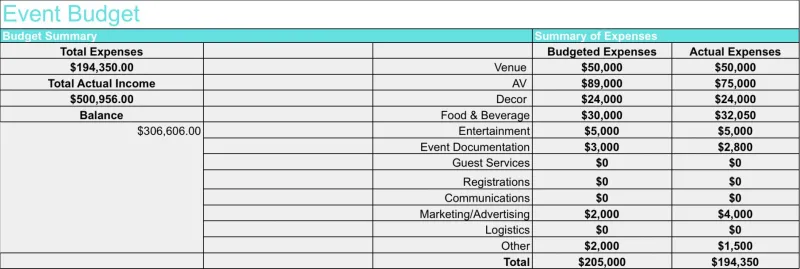
Photo: event organiser budget planning live music venue behind the scenes UK, via www.janetemplate.com
There's a version of event production that looks, from the outside, almost magical. A show appears. People turn up. Something happens. Then it's gone. What you don't see — what nobody talks about at the bar afterwards — is the spreadsheet. The back-and-forth with the venue. The insurance quote that made someone's eye twitch. The three weeks of unpaid promotion work.
We thought it was time to talk about it. So we asked four Bury-based event organisers — a music promoter, a theatre producer, a spoken word night curator, and a community festival organiser — to walk us through their actual numbers. Names have been changed where requested, but the figures are real.
The 50-Cap Gig: Where It All Starts
Sarah has been promoting small gigs in Bury for six years. She started because she wanted to see more of the music she loved in her own town and couldn't find anyone else doing it. She now runs roughly one event a month, usually in venues with a capacity between 50 and 120.
Here's what a typical 50-cap show looks like for her:
Venue hire: £150–£200. Some venues waive this in favour of a bar split arrangement, where the promoter gets a percentage of bar takings. "Bar splits sound attractive," Sarah says, "but they're unpredictable. I prefer to know my costs upfront."
Artists: £100–£300 for a headline act, £50–£100 for support. "I always pay artists. Always. Even when I lose money on the show."
PA and sound engineer: £150–£250, unless the venue has an in-house system included in the hire fee. This is one of the most variable costs and one of the most worth negotiating.
Ticketing platform fees: Approximately 10–12% of ticket revenue if using a third-party platform. Sarah has started using a direct bank transfer system for smaller shows to avoid this, accepting the admin overhead in exchange for keeping more of the money.
Promotion: Printing costs for physical flyers run to about £30–£50. Online promotion is theoretically free, but Sarah estimates she spends 8–10 hours per show on social media, email, and community outreach. "That's the hidden cost nobody counts. If I charged for my time, nothing would be viable."
Insurance: Public liability insurance for a one-off event can be obtained for as little as £50–£80 through specialist event insurers. Sarah holds an annual policy, which works out cheaper across a full programme.
Total outlay for a 50-cap show: roughly £480–£680.
At a £8 ticket price and 45 attendees — a realistic figure for a well-promoted but not sold-out show — she takes £360. On a bad night, she's down £300. On a good night, when the venue is full and she's negotiated a better deal, she might break even or make a small profit.
"I don't do it for the money," she says. "Obviously. But I do track everything, because if I don't understand where I'm losing money, I can't make better decisions."
Theatre: The Numbers Get Bigger and More Complicated
Marcus produces community theatre — a mix of original work and established scripts — with a loose company of volunteer and semi-professional performers. His shows typically run for three or four nights in a venue with a 120–150 seat capacity.
His cost breakdown looks very different:
Venue hire: £400–£600 per night, depending on the venue and whether technical staff are included. For a four-night run, that's potentially £2,400 before anything else.
Rights and licensing: For a published script, performance rights typically run to £80–£150 per performance, paid to the publisher. Original work avoids this cost entirely — one reason Marcus increasingly prioritises new writing.
Set and costume: Hugely variable. Marcus's company has built up a stock of reusable materials and has relationships with local costume hire businesses. A show that might cost £800 in materials from scratch costs them closer to £200.
Marketing: A proper print run of A3 posters and A5 flyers, plus listings in local publications, runs to around £200–£300. Press releases are written in-house.
Technical: Lighting design and operation, if not included in venue hire, can add £200–£400.
Total for a four-night run: £3,500–£5,500, depending on variables.
At £12 a ticket and an average house of 90 people over four nights, Marcus takes £4,320. "We aim to break even. Occasionally we do better. Occasionally we don't. The model only works because our performers aren't paid professional rates — and that's a conversation I'm not entirely comfortable with."
It's a tension that runs through community theatre everywhere. The goodwill is real. So is the exploitation risk.
Spoken Word: The Leanest Model in Town
Rachel runs a monthly spoken word night that has been going for three years. Her model is the leanest of anyone we spoke to.
Venue: A pub back room, provided free in exchange for the bar revenue the event generates. "Finding that venue was the thing that made everything else possible."
Performers: Paid in a hat-pass — a portion of donations collected on the night. "Everyone knows this going in. It's not ideal, but it's honest."
Promotion: Entirely digital, entirely free. Rachel runs the social media herself.
Costs: Essentially zero in hard cash. The investment is entirely in time.
Revenue: The hat-pass typically generates £60–£100, split between performers. Rachel takes nothing.
"I know this model doesn't scale," she says. "And I know it relies on venues being willing to support culture without charging for it. But it means the night exists, and it means performers get something. That matters."
Where the Real Savings Are
Across all four organisers, a few consistent money-saving strategies emerged:
Co-promotion. Sharing costs and audiences with another promoter running a complementary event. Two nights, shared marketing budget, shared risk.
Venue relationships. The difference between a venue that sees culture as a revenue line and one that sees it as part of their identity is significant. The latter will negotiate. The former won't. Finding the former is worth the time.
In-kind support. Local businesses — printers, caterers, equipment hire companies — are often willing to offer reduced rates or pro bono support in exchange for prominent credit. It requires asking, which many organisers find uncomfortable. Ask anyway.
Grants. Arts Council England's National Lottery Project Grants start from £1,000 and are specifically designed for exactly this kind of activity. The application process is not trivial, but for events with a clear community benefit, the success rate is reasonable. Several of Bury's most ambitious recent events have been part-funded this way.
The Honest Conclusion
Live events in Bury are not financially sustainable in any conventional sense. The people making them happen are subsidising culture with their time, their goodwill, and occasionally their own money. That's a problem that no amount of clever budgeting entirely solves.
But knowing your numbers — actually knowing them, not guessing — is the difference between losing money intentionally and losing it by accident. Every organiser we spoke to had learned this the hard way.
The spreadsheet isn't glamorous. But it's what keeps the show on the road.