From Mill Floor to Gallery Wall: The Artists Spinning Bury's Industrial Soul Into Tomorrow's Masterpieces
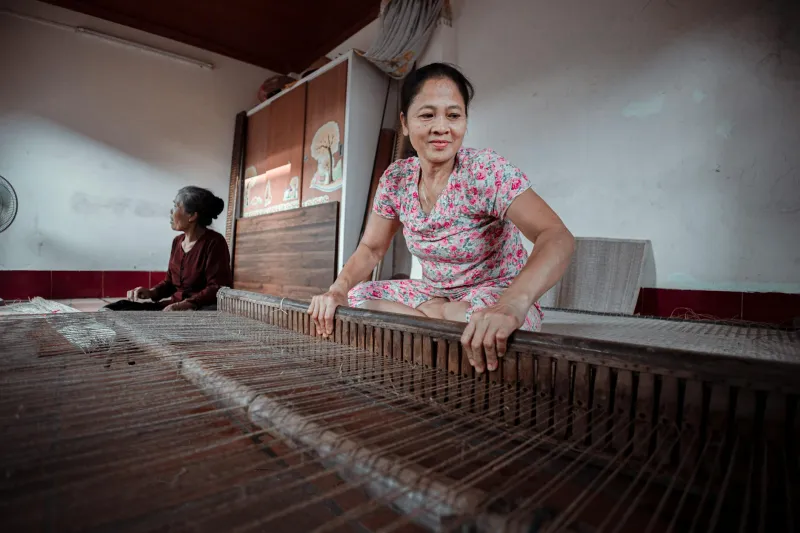
The Looms Are Silent, But the Stories Continue
Walk through Bury's streets today and you'll still hear echoes of the industrial revolution—not in the clatter of machinery, but in the purposeful tap-tap-tap of contemporary looms tucked away in converted mill spaces. Where once thousands of workers spun cotton and wool into the fabric of Britain's economy, a smaller but equally passionate community of artists is weaving something entirely different: a cultural revival that honours the past whilst boldly facing the future.
The transformation is remarkable. What began as whispered conversations in local cafés about 'doing something with all these empty mills' has blossomed into a proper movement. Artists, designers, and craftspeople are claiming these industrial cathedrals as studios, galleries, and collaborative workshops—spaces where Bury's textile DNA is being spliced with cutting-edge artistic expression.
Where Heritage Meets Innovation
Sarah Chen's studio in the old Whitehead Mill exemplifies this fusion perfectly. Her large-scale installations incorporate traditional Lancashire weaving patterns with modern sustainable fibres, creating pieces that speak simultaneously to Bury's industrial heritage and contemporary environmental concerns. "People assume textile art is somehow 'lesser' than painting or sculpture," she explains, threading recycled plastic yarn through a centuries-old loom pattern. "But this is where our town's soul lives—in these techniques, these rhythms our grandparents knew by heart."
The irony isn't lost on anyone involved in this renaissance. Bury's mills once exported textiles globally, yet the town itself was left behind when manufacturing moved overseas. Now, these same buildings are becoming incubators for art that's gaining international recognition—but this time, the value stays local.
Community Threads
What makes this movement particularly compelling is its grassroots nature. The Bury Textile Collective, formed just three years ago, has grown from six founding members to over forty active participants. Their monthly 'Stitch & Stories' sessions in the old Ramsbottom Mill have become legendary—part workshop, part therapy session, part cultural salon.
"We get everyone," says collective co-founder Marcus Thompson, whose own work transforms industrial felt-making techniques into abstract sculptures. "Retired mill workers sharing stories with art school graduates, teenagers learning embroidery from their nans, immigrants bringing textile traditions from their home countries. It's proper community building."
The collective's recent exhibition, 'Warp & Weft: New Voices from Old Mills,' drew visitors from across the North West. More importantly, it drew investment. Local council support, Arts Council England funding, and even interest from London galleries—suddenly, Bury's textile revival has momentum that feels sustainable.
The Politics of Thread
There's something inherently political about reclaiming industrial heritage through art, particularly in a town that's weathered decades of economic uncertainty. These artists aren't just making beautiful objects—they're making statements about value, about who gets to define culture, about what working-class creativity looks like when it's given proper support.
Take the work of the Bury Tapestry Project, currently creating a massive community artwork documenting local stories through traditional tapestry techniques. Led by artist-activist Jenny Holroyd, the project has collected over 200 personal narratives from residents—stories of migration, of loss, of resilience, of hope. Each story becomes part of an ever-growing textile narrative that will eventually span an entire mill wall.
"This isn't nostalgia," Holroyd insists. "This is about showing that our heritage isn't something that happened to us—it's something we actively carry forward and transform."
Future Fabrications
The success of Bury's textile renaissance is already inspiring similar movements across former industrial towns. But what makes the local scene special is its refusal to choose between tradition and innovation. These artists understand that preservation without evolution is just museum-keeping—and Bury deserves better than being a relic.
Plans are already underway for a permanent Textile Arts Quarter in the old industrial district. Studio spaces, exhibition areas, workshops for schools, even a textile library preserving local patterns and techniques. It's ambitious, but then again, so was building a global textile empire from a market town in Lancashire.
The artists spinning this new chapter aren't trying to recreate Bury's industrial heyday—they're creating something entirely different. Something that honours the hands that worked these looms before them whilst weaving stories that are uniquely their own.
In converted mills across town, the shuttles are flying once again. But this time, they're weaving more than fabric—they're weaving a future where Bury's cultural identity is as strong as its industrial legacy ever was.