Bodies in Motion: The Secret World of Bury's Movement Artists
The Space Between Spaces
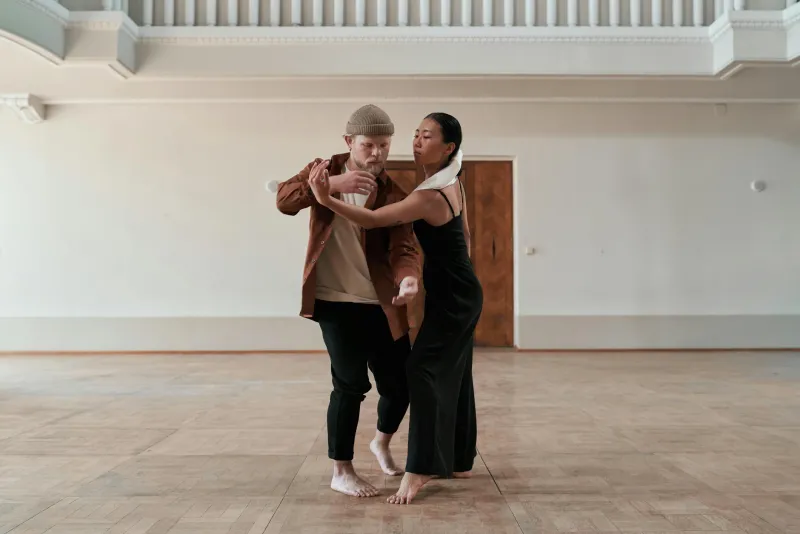
The floorboards creak with decades of history as bodies move through the main hall of St. Andrew's Church. It's 7pm on a Wednesday, and what was once exclusively the domain of parish meetings and jumble sales has become something altogether more dynamic. Mirrors lean against gothic stone walls, speakers balance precariously on ancient radiators, and twenty dancers of all ages lose themselves in movement that speaks languages older than words.
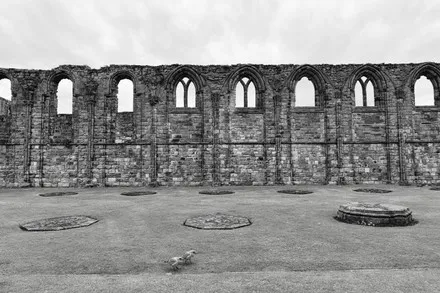 Photo: St. Andrew's Church, via www.shutterstock.com
"People think dance needs purpose-built studios and sprung floors," says Amara Okafor, the contemporary choreographer who's transformed this unlikely space into Bury's most innovative movement laboratory. "But some of our best work comes from adapting to what we have. These old buildings have their own rhythm, their own energy. We just learn to dance with them."
 Photo: Amara Okafor, via lookaside.instagram.com
This is Bury's dance scene – not the polished productions of Manchester's theatres or the commercial studios of city centres, but something grittier, more immediate, more real. In community centres, church halls, and repurposed industrial spaces, movement artists are creating work that reflects the town's multicultural identity and working-class spirit.
Roots and Routes
The story begins in the 1980s, when Bury's growing South Asian community brought classical Indian dance forms to local temples and cultural centres. Bharatanatyam and Bollywood fusion classes started in living rooms before graduating to proper halls, laying groundwork for today's diverse scene.
"My mum learned Bharatanatyam in our front room," recalls Priya Patel, whose contemporary fusion company Bridge & Tunnel now performs across the North West. "Twenty women crowded into our terraced house every Saturday morning, learning steps that connected them to home while helping them build a new one here."
Those early gatherings established something crucial: dance as community building, as cultural preservation, as resistance against isolation. When breakdancing arrived via MTV and travelling crews in the late 80s, it found fertile ground in the same community centres where traditional forms were already thriving.
"The Asian aunties would finish their class, and we'd roll out cardboard for breaking," remembers Marcus Thompson, now 45 and still teaching street dance at the Radcliffe Community Centre. "They'd stay to watch sometimes, these two worlds existing side by side. Looking back, that was pure Bury – different traditions finding common ground."
The Contemporary Revolution
Today's scene builds on those foundations while pushing into uncharted territory. Amara's company, Liminal Spaces, creates work that directly engages with Bury's industrial heritage, using movement to explore themes of labour, community, and transformation.
"We did a piece last year in the old textile mill," she explains, demonstrating a sequence that mimics the repetitive motions of factory work before exploding into liberation. "The dancers were moving between the old machinery, telling the story of bodies that built this town. It wasn't pretty or comfortable, but it was honest."
The company performs wherever space allows – car parks, shopping centres, the steps of the town hall. This guerrilla approach stems partly from necessity (dance remains chronically underfunded compared to music or visual arts) but also from philosophy.
"Dance shouldn't be precious," argues company member James Riley, whose background spans everything from Morris dancing to hip-hop. "It should be where people are, part of daily life. When we perform in Bury Market, shoppers stop and watch. Kids start moving. That's when you know you're doing something right."
 Photo: Bury Market, via discoverbury.co.uk
The Youth Movement
The next generation is pushing boundaries even further. At Bury Youth Centre, 16-year-old Zara Ahmed leads a crew that blends street dance with contemporary and traditional Pakistani folk forms, creating something entirely new.
"We call it 'Urban Bhangra Fusion,'" she explains, her crew demonstrating moves that seamlessly transition from popping and locking to traditional Punjabi steps. "It's our story – growing up between cultures, finding our own way to move through the world."
Their performances at local festivals have drawn attention from Manchester's dance scene, but the crew remains committed to Bury. "This is where we learned to dance, where our community is. We want to show people what's possible here, not escape to somewhere else."
The Funding Challenge
Despite the creativity and community engagement, dance faces systemic challenges that other art forms don't encounter. Funding bodies often view movement as recreational rather than artistic, while the physical demands of dance make it expensive to sustain.
"Musicians need instruments, visual artists need materials, but dancers need space, and space costs money," explains Caroline Webb, who coordinates dance activities across three community centres. "We're constantly fundraising just to keep the lights on and the heating working."
The lack of a dedicated dance venue in Bury means companies like Liminal Spaces rehearse wherever they can find space, often paying commercial rates for church halls or community centres. Equipment gets stored in spare bedrooms and car boots, transported from venue to venue in a weekly ritual that would exhaust less committed artists.
"We need a permanent home," says Amara simply. "Somewhere dancers can take risks, experiment, fail safely. Somewhere the community knows they can always find us."
The Vision Forward
Despite the challenges, Bury's dance scene continues to evolve and expand. Plans are underway for a summer dance festival in Bury's parks, while several groups are exploring partnerships with schools to bring movement education to young people who might never otherwise encounter it.
"Dance tells stories that words can't," reflects Marcus from his community centre studio, where three different classes share space throughout the week. "In a town like Bury, where people come from everywhere and nowhere, movement becomes a common language."
The dream is simple but ambitious: recognition that dance isn't just recreation or entertainment, but essential cultural expression that deserves the same support and respect as other art forms. Until then, the movement artists of Bury will continue doing what they do best – adapting, creating, and proving that the most powerful performances often happen in the most unlikely places.
Every creak of those church hall floorboards, every echo in those community centre spaces, tells the story of bodies in motion, communities in transition, and art forms that refuse to be contained by conventional boundaries.